

Article

Peatlands: A Vital Line of Defense and a Treasure Trove of Life on Earth, Why Peatland Fires Can Have Devastating Consequences


 By :
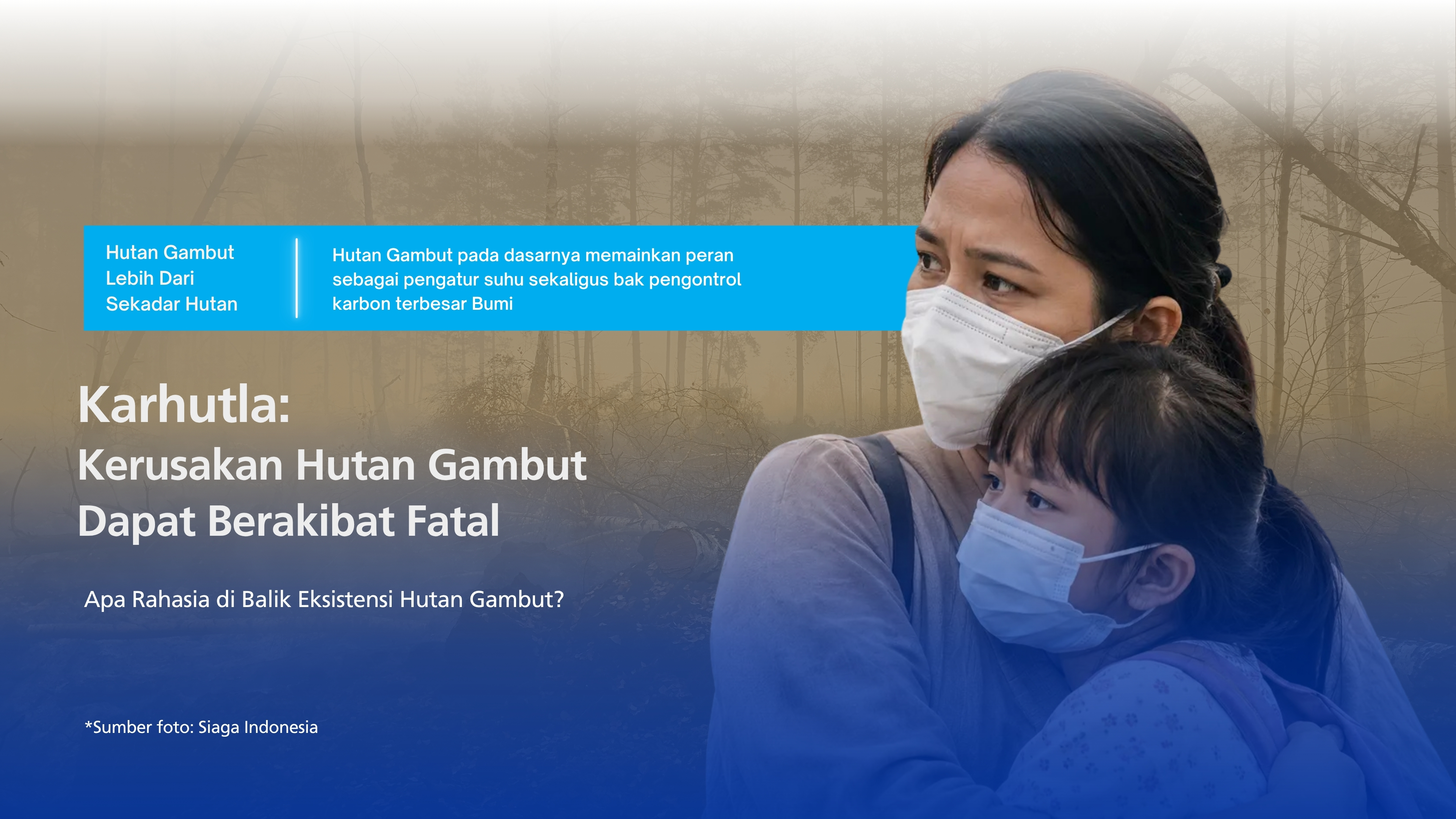
Beneath seemingly quiet and unassuming stretches of waterlogged land lies one of the Earth's most important lines of defense in sustaining life and maintaining ecological balance, Kawan UNDIRA. According to reports published by the United Nations Environment Programme (UNEP), peatlands are unique ecosystems made up of organic materials that are undergoing or have undergone decomposition under water-saturated soil conditions.
Although peatlands cover only around 3–4% of the Earth's surface, they do far more than produce oxygen, as other vegetation does. They also play a crucial role in supporting the world's ecosystems as a whole. According to Greenpeace, Indonesia has the world's fourth-largest peatland area, spanning approximately 15 million hectares and holding around 60 million tonnes of carbon.
First, peatland forests are far from ordinary forests, Kawan UNDIRA. They can be likened to some of the largest natural sponges on Earth. Under ideal conditions, peat consists of decomposed plant remains whose porous structure allows them to absorb water. These extensive pores facilitate capillary action, enabling peat to absorb and store water at levels many times greater than its dry weight, sometimes reaching more than ten times that amount. According to various studies, this natural water storage and regulation system does more than provide a source of water. Through the moisture retained in peat layers, it also contributes to atmospheric humidity and the formation of rainfall, much like a vast natural engine that helps sustain the water cycle.
Second, peatlands serve as natural temperature regulators for their surrounding ecosystems. Their ability to absorb, store, and release large quantities of water and water vapor makes them highly effective natural heat sinks. Because of their high water content, peatlands heat up relatively slowly, while evaporation from their surfaces helps lower the surrounding temperature. In other words, they function as natural cooling systems for the areas around them. Healthy peatlands provide this cooling effect across vast stretches of land, helping maintain a more balanced local climate.
The problem arises during forest and land fires, particularly when groundwater reserves are depleted or excessive drainage canals are constructed. Under these conditions, peat fibers can undergo shrinkage and compaction as a result of matric suction, the process through which water is drawn through the soil matrix. Even when water remains deep underground, the altered pore structure of dried and compacted peat can make it difficult for that water to replenish the upper layers of the peatland. Combined with the hot and dry conditions associated with El Niño, this can turn peatland forests into vast expanses of highly flammable material.
Third, and perhaps one of the most critical yet frequently overlooked aspects of peatlands, Kawan UNDIRA, is their role in storing carbon. Beyond supporting green vegetation that produces oxygen, peatlands are among the world's most important natural carbon reservoirs. Beneath their forested surfaces, enormous amounts of carbon are stored in organic matter, preventing much of it from entering the atmosphere as greenhouse gases. This makes the continued protection of peatlands essential to maintaining the Earth's climate balance.
According to the United Nations Environment Programme, peatlands store approximately 450–650 gigatonnes of carbon. To understand the significance of this, let us take a closer look at the underlying chemistry. Carbon is an element, represented by the symbol C, while methane is a compound with the chemical formula CH₄. When large amounts of carbon stored in peatlands are released into the atmosphere, particularly through fires that expose and burn accumulated organic matter, they can contribute significantly to greenhouse gas emissions. Smoke and gases released by these fires add to air pollution, while greenhouse gases trap heat in the Earth's atmosphere. This process intensifies the greenhouse effect and can disrupt weather patterns over the long term, further aggravating climate change.
The devastating peatland and forest fires that have claimed lives and severely disrupted everyday life, accompanied by a reported record of more than 280,000 cases of acute respiratory infections (ARI), demonstrate just how much is at stake. Although peatland forests may appear modest compared with the towering forests we encounter while traveling, their continued existence is, in reality, one of the most valuable treasures we share with every living being on Earth.
The Earth is not merely the ground beneath our feet; it is a home entrusted to us, one that we borrow from future generations. As beings endowed with reason and logos, the capacity for rational thought, humans have the ability to shape the course of progress toward a better future rather than a worse one. Looking back at the devastating peatland fires we continue to witness, perhaps it is time to ask ourselves a difficult question: Are we becoming more monstrous than the very “monsters” we imagine inhabiting the forests that are now disappearing into ashes, along with the homes they once provided?
Never stop speaking up, Kawan UNDIRA. Never grow weary of protecting our environment, and never hesitate to share your thoughts and stand for what is right. A healthy Earth will one day become one of the most precious legacies we can leave to our children and grandchildren. The future of our planet depends not only on what we choose to preserve today, but also on what we refuse to let disappear tomorrow.
Sources of Reference:
The importance of peat for health and climate - Greenpeace Official Website
How is CO2 Warming Up The Planet? - YouTube DW Planet A Channel
(Danang Respati Wicaksono / Humas UNDIRA)
Press Contact :
Biro Humas & Sekretariat Universitas Dian Nusantara
Facebook : www.facebook.com/undiraofficial
Instagram : www.instagram.com/undiraofficial
Twitter : www.twitter.com/undiraofficial
www.undira.ac.id
Other

Still Confused? Get to Know UNDIRA’s Academic Information System (SISKA) and Its Usage Regulations
Read more
Optimizing Online Teaching Techniques: UNDIRA Hosts E-Learning Workshop
Read more
Screening of the AI-Generated Film “Diponegoro Hero” by USKY: UNDIRA Management Students Gain Insights into AI Film Production
Read more
Campus Tanjung Duren
Jln. Tanjung Duren Barat II No. 1
Grogol, Jakarta Barat. 11470
Campus Green Ville
JIn. Mangga XIV No. 3
Campus Kranggan
Jln. Raya Kranggan, No.6,
Jatiraden, Kec. Jatisampurna, Bekasi. 17432


