

Article

Knowing the Red Herring and Strawman: What Are They and What Is Their Purpose?


 By :
By : 
In both public and academic discussions, we are often given the opportunity to express ideas, communicate, and present arguments in order to reach certain agreements. However, during the process of delivering arguments, we do not rely solely on the strength of data, but also on logic with the expectation of constructing reasoning that can be accepted by others.
Nevertheless, when we rely on logic, there are moments when our emotional side emerges and causes our arguments to appear less valid or even deviate from sound reasoning—this phenomenon is known as a logical fallacy.
In general, logical fallacies that occur when we communicate opinions often happen unintentionally, either due to a lack of information or cognitive bias. On the other hand, logical fallacies may also be used deliberately as a strategic tool to win arguments through invalid evidence, distortion of facts, or diversion of the discussion topic.
Some of us may have encountered the term Red Herring. In this context, Red Herring does not refer to a species of fish, but rather to a communication tactic that employs a logical fallacy. Essentially, a Red Herring is a strategy used to divert attention away from the primary issue being discussed or to avoid addressing a particular topic.
In simple terms, a Red Herring obscures the focus of the discussion by inserting irrelevant information or information with minimal contextual relevance. An everyday example of a Red Herring might be:
“Support for the MSME sector can indeed advance the nation, but do you know the current condition of the Indonesian Composite Stock Index (IHSG)?”
On the other hand, another frequently discussed logical fallacy is the Strawman. Although both Red Herring and Strawman are variations of logical fallacies, the Strawman fallacy focuses on the distortion or misrepresentation of an opponent’s argument or communicative intention, often resulting in conclusions that reflect a misunderstanding of the original statement.
In essence, a Strawman argument is refuted by jumping to conclusions through the insertion of subjective interpretations. For example:
A: AI and programming have the potential to replace human roles.
B: So, according to you, we should slow down AI development and completely ban the use of AI?!
In this example, although Speaker A did not imply any intention to prohibit the use of AI entirely, Speaker B subjectively distorts the argument to create a narrative suggesting that AI is a catastrophic threat. Strawman arguments often occur due to hasty conclusions and emotional reactions.
When flawed reasoning occurs on a large scale, it can reduce public perception and may also be used to steer public opinion in accordance with the intentions of an orator. Through this brief case illustration, it is safe to say that communication functions as a medium that supports and shapes thought processes capable of influencing public perception.
Although both tactics may appear effective in argumentation or communication, as academics, we must be able to formulate communication and arguments that are accountable and supported by verifiable validity. This reflects not only integrity but also a visionary approach to communication.
Through the academic approach offered by the Communication Science Study Program at Universitas Dian Nusantara (UNDIRA), students are equipped with the study of communication theories, media analysis, and strengthened critical thinking skills, along with the competence to construct accountable arguments, understand the dynamics of public opinion, and identify various forms of logical fallacies such as Red Herring and Strawman in everyday communication practices.
As a result, graduates are not only capable of conveying ideas persuasively and strategically but also committed to upholding intellectual integrity in every communication process they engage in, both in professional and public spheres.
Source of Reference:
Logical Fallacy Adalah: Mengenal Pengertian, Jenis, dan Contohnya - Gramedia
Kekeliruan Ikan Herring Merah: Kesalahan yang Kita Temui Setiap Hari - MindTheGraph
Berbagai Macam Sesat Pikir (Logical Fallacy) - Ruang Guru
(Danang Respati Wicaksono / Humas UNDIRA)
Press Contact :
Biro Humas & Sekretariat Universitas Dian Nusantara
Facebook : www.facebook.com/undiraofficial
Instagram : www.instagram.com/undiraofficial
Twitter : www.twitter.com/undiraofficial
www.undira.ac.id
Other
.jpg)
Bridging the Gap and Advancing Literacy: Questioning a Precious Golden Habit
Read more
Efforts to Improve SPMI Competence and Quality, UNDIRA sends 8 participants to attend AMI Auditor Candidate Training
Read more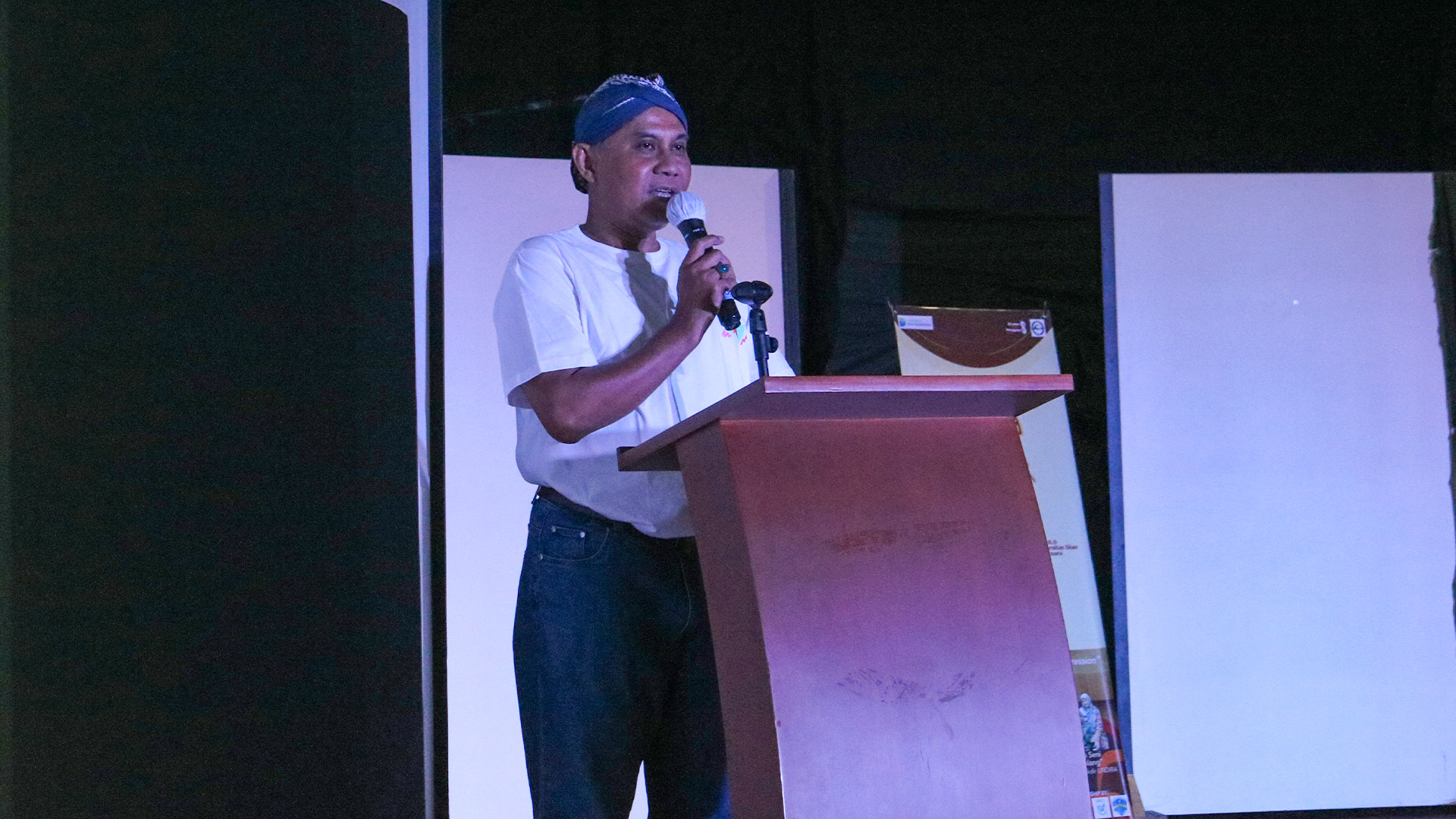
With the Spirit of Art and Literature, Teater Takdir UNDIRA Presents 'Limitless Creativity, Artistic Expression'
Read more
Campus Tanjung Duren
Jln. Tanjung Duren Barat II No. 1
Grogol, Jakarta Barat. 11470
Campus Green Ville
JIn. Mangga XIV No. 3
Campus Kranggan
Jln. Raya Kranggan, No.6,
Jatiraden, Kec. Jatisampurna, Bekasi. 17432


