

Article

Why Is MSCI a Hot Topic in Investment and Economic Stability? MSCI in a Nutshell


 By :
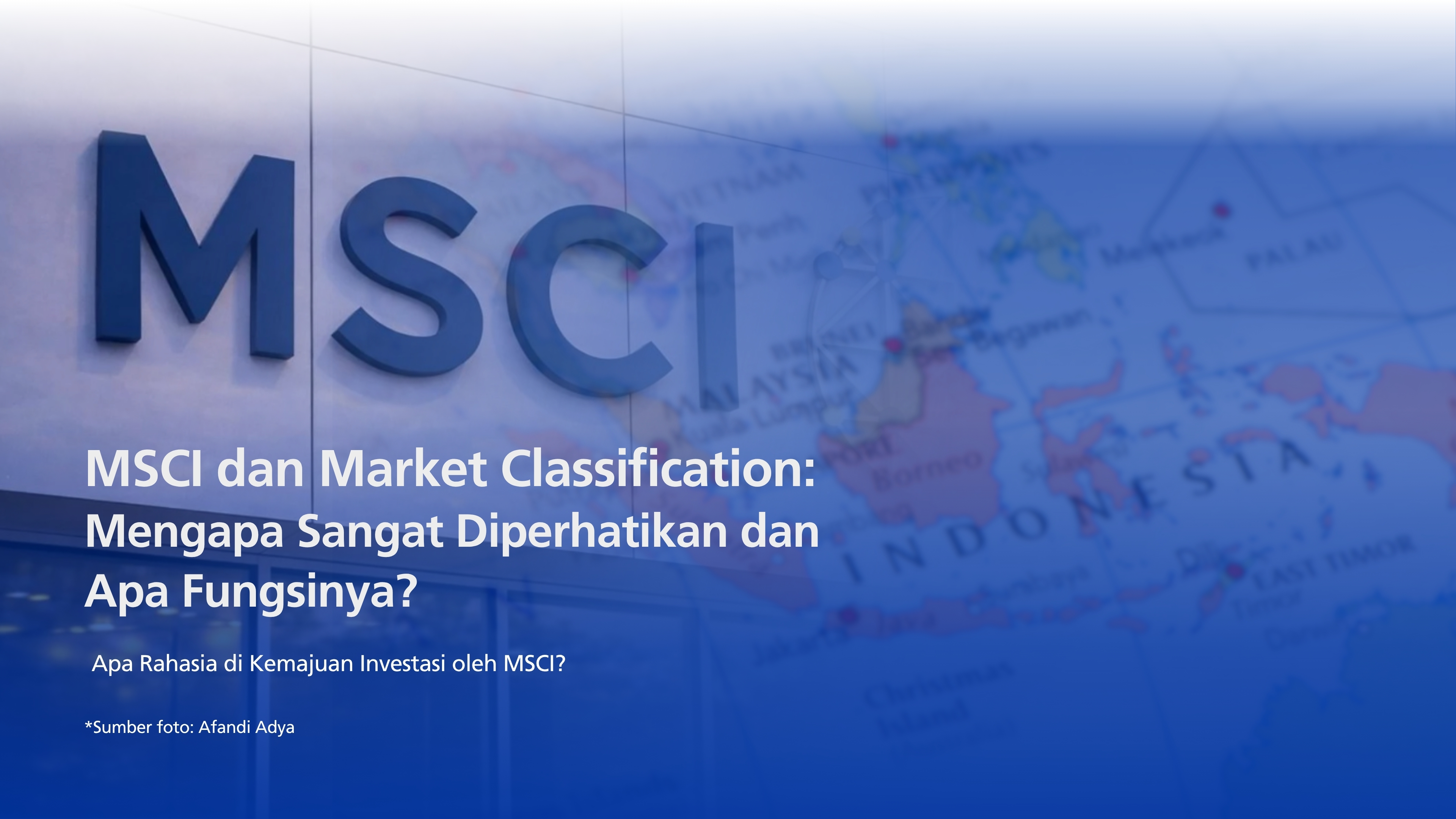
Recently, in addition to the tragic news caused by forest and land fires (karhutla), Indonesia’s resilience is now also being tested in terms of investment and economic stability. For UNDIRA friends who’ve been following investment news, you’ve surely come across various trending topics regarding negative sentiment toward our investment climate and one issue currently drawing attention from many quarters is the downgrade of Indonesia’s capital market classification to the “standalone” category. Wait, doesn’t “standalone” mean independent? Isn’t that a cool and positive thing? Actually, it’s quite the opposite, UNDIRA friends. Let’s discuss together what MSCI is and its impact on the investment climate and the Indonesian economy.
First, what exactly is MSCI? MSCI, or Morgan Stanley Capital International, is essentially a company that provides and evaluates stock market indices and similar instruments, headquartered in New York, USA. MSCI’s mission centers on measuring performance, transparency, and regulation in global capital markets using benchmarks. MSCI has several classification categories: Developed Markets, Emerging Markets, Frontier Markets, and, finally, Standalone Markets.
MSCI is responsible for classifying capital markets based on several categories: a country’s capital market liquidity, free float (or concentration of stock ownership), and transparency and communication regarding a country’s capital market environment. These assessments, like it or not, can influence decisions and reviews of a country’s capital market classification, and at the same time can affect foreign capital flows.
So, what exactly has MSCI been taking issue with regarding Indonesia recently? For those unfamiliar with the investment world, MSCI’s assessment might seem like mere rumor, but in reality, this decision will have a major impact on most sectors, UNDIRA friends not just the IHSG. If a country’s stock exchange status were to be downgraded, it would trigger a domino effect across the entire society, not just among industry players or shareholders alone.
Returning to the discussion in the second paragraph, MSCI is not concerned with the size of a country’s economy, but rather with the health of its market mechanisms. MSCI highlights a stock ownership structure deemed to lack transparency, making it difficult to determine exactly how many shares are actually available for trading. MSCI also points to allegations of coordinated trading that could disrupt the formation of fair prices, as well as law enforcement practices deemed insufficiently transparent.
If a country is downgraded to the “frontier” or even “standalone” category, there is a high likelihood that it will struggle to revitalize a healthy and more stable investment climate, UNDIRA friends. This is because the ratings issued by MSCI serve as a signal to many global investors regarding whether to invest in a country, and with a negative perception, a country will be deemed unprofitable in terms of Return on Investment (ROI) over a certain period, meaning there will be significant risk when foreign investors enter a capital market with low accountability. This will have a major impact, especially on developing countries, including Indonesia.
When the stock market falls, it becomes increasingly difficult for companies to attract capital inflows, economic transaction volumes decline, and eventually, this will gradually affect the rupiah exchange rate and purchasing power.
In essence, shocks in the capital market rarely stop at the trading screen. A weakening rupiah has the potential to spill over into the prices of imported goods and the cost of living, while declining investor confidence can affect the flow of funds that support the economy and the industrial sector at both the top and bottom levels.
Ultimately, the MSCI story is a story of trust. Capital markets operate on the belief that the rules are clear, information is transparent, and violations are addressed. That seemingly technical concept of transparency actually determines whether the world is willing to entrust its funds to us. For our friends at UNDIRA, this moment also serves as a valuable lesson in financial literacy: together, let’s build a capital market and an investment literacy space that are more accountable and transparent. The period leading up to the year of 2027 is our opportunity to prove that these reforms are more than just empty promises. Stay calm, stay critical, and keep learning.
Sources of Reference:
Ferry Irwandi, Memahami masalah dan Dampak MSCI untuk perekonomian Indonesia
MSCI dan Dampaknya bagi Pasar Modal Indonesia - Maybank Sekuritas
Mengenal klasifikasi MSCI dan dampaknya bagi pasar saham - IDN Financials
(Danang Respati Wicaksono / Humas UNDIRA)
Press Contact :
Biro Humas & Sekretariat Universitas Dian Nusantara
Facebook : www.facebook.com/undiraofficial
Instagram : www.instagram.com/undiraofficial
Twitter : www.twitter.com/undiraofficial
www.undira.ac.id
Other

Success Goes Beyond Logic and Formulas! Let's Explore the Role of Imagination in Life
Read more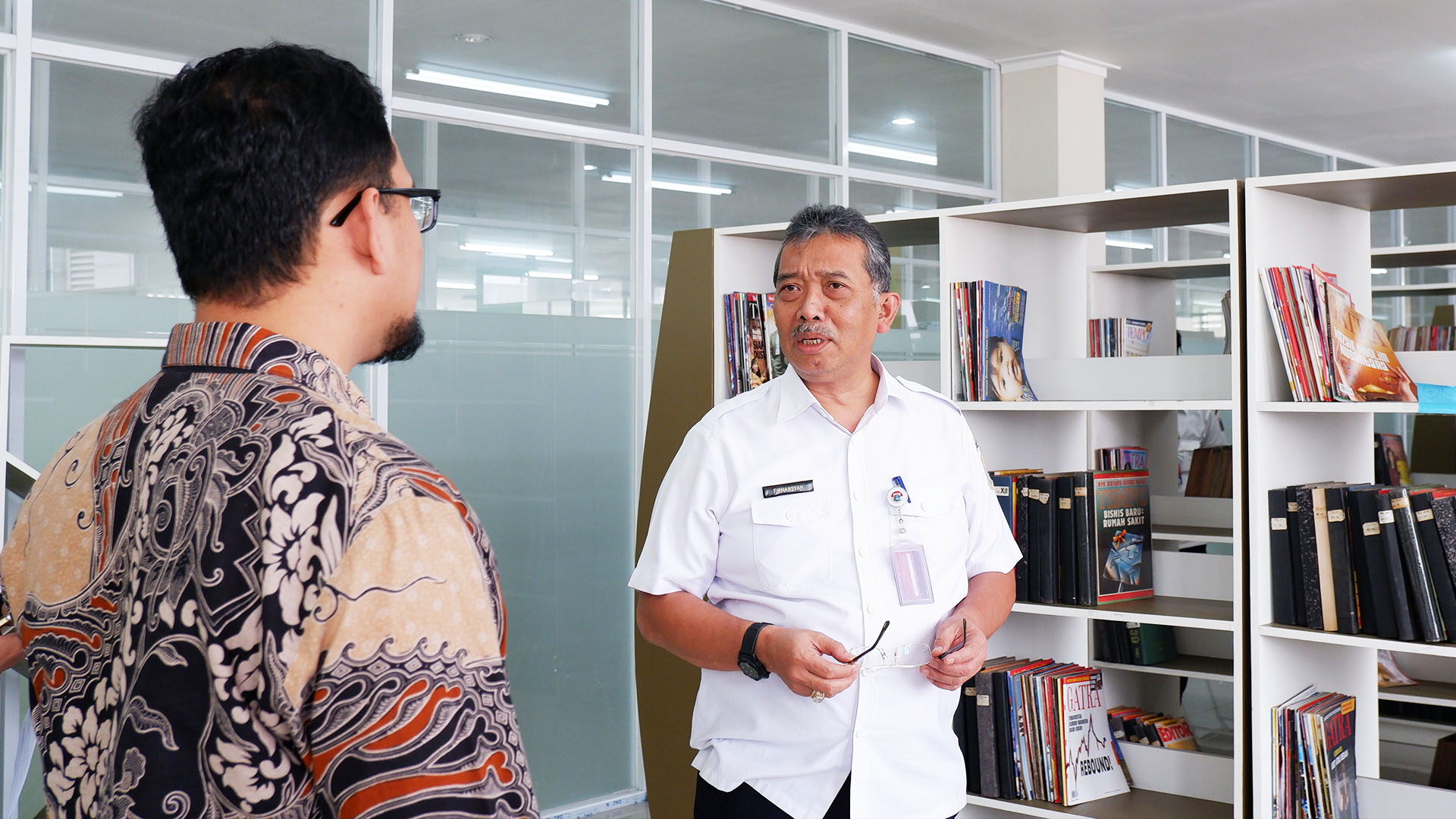
Working Visit of DKI Jakarta Provincial Library and Archives Office to Dian Nusantara University Library
Read more
Enhancing Teaching Quality and Academic Performance: UNDIRA Holds Faculty Coordination Meeting
Read more
Campus Tanjung Duren
Jln. Tanjung Duren Barat II No. 1
Grogol, Jakarta Barat. 11470
Campus Green Ville
JIn. Mangga XIV No. 3
Campus Kranggan
Jln. Raya Kranggan, No.6,
Jatiraden, Kec. Jatisampurna, Bekasi. 17432


