

Article

When the Land Holds the Flames: Understanding Peatland Fires and Why They Are So Difficult to Extinguish


 By :
By : 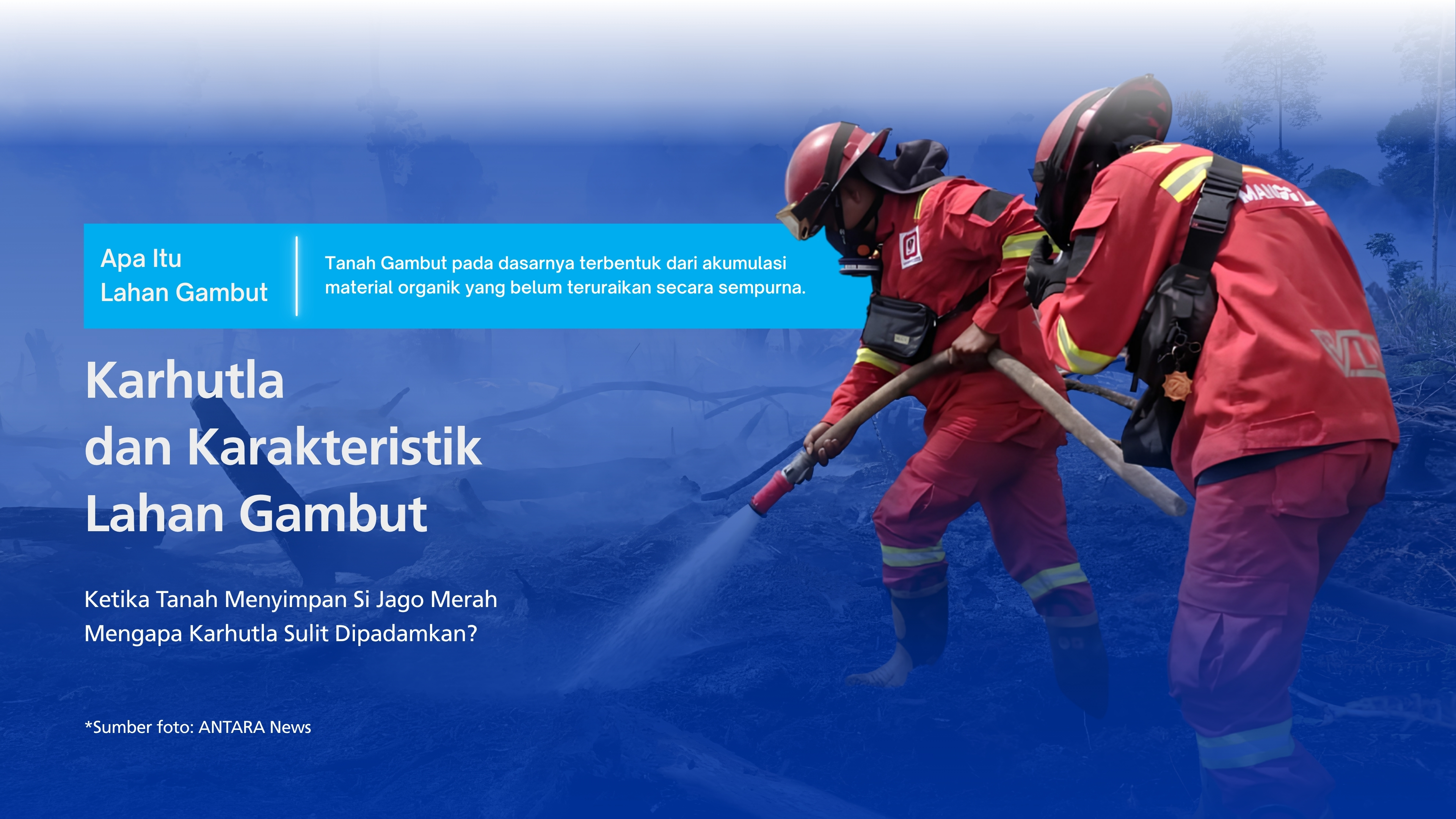
When we witness a fire, our first instinct is often to think, “Just pour as much water on it as possible, and it will go out quickly. It’s a simple solution.” While this approach generally works for ordinary fires, what happens when the same logic is applied to forest and land fires, known in Indonesia as karhutla, which have recently affected several regions across the country, particularly Kalimantan?
According to reports published through the official channels of Indonesia’s Ministry of Forestry, approximately 789 forest and land fire hotspots have been recorded, with fires reportedly continuing to spread in several areas. Based on data and observations from the Ministry’s Forest and Land Fire Monitoring System, the situation has further worsened air quality not only in Indonesia but also in neighboring countries such as Malaysia and Singapore.
Although water is generally effective at extinguishing fires, the current karhutla crisis presents a particular challenge: fires can reignite even in areas where the flames appear to have been extinguished. Why does this happen, Kawan UNDIRA? Let’s take a closer look.
The difficulty of extinguishing forest and land fires is closely associated with a phenomenon known as smouldering combustion, or underground smouldering. Even when flames on the ground’s surface have been put out, combustion can continue beneath the surface. This is largely related to the structure and characteristics of the affected areas, many of which consist of peatlands with several distinctive properties.
Peat soil has unique physical characteristics, including high water content, high porosity, low particle density, low bulk density, high compressibility, and a considerable tendency to shrink. These properties distinguish peat soil from mineral soil, both in terms of its geotechnical behavior and its susceptibility to fire.
Peat forms through the accumulation of organic matter, primarily plant remains, that decompose incompletely under waterlogged and oxygen-deficient conditions. As a result, peat soil exhibits physical properties that differ significantly from those of mineral soil, particularly in terms of moisture content, bulk density, porosity, permeability, bearing capacity, and compressibility.
However, dry weather associated with El Niño can make the situation considerably worse. Reduced water availability accelerates moisture loss and allows excessive heat to accumulate in both the upper and deeper layers of peatland. As the soil dries, oxygen (O₂) can penetrate the pore spaces within the organic material, supporting combustion when sufficient heat is present.
Consequently, smouldering embers can persist for weeks or even months before resurfacing when environmental conditions become favorable. These fires can also produce dense smoke and release substantial amounts of carbon emissions and hazardous pollutants, including fine particulate matter such as PM2.5.
To address the ongoing karhutla crisis, conventional firefighting methods alone are often insufficient to fully extinguish these fires. One promising approach involves inserting water-delivery nozzles into the ground to direct water toward burning layers beneath the surface. Another important measure is monitoring the groundwater table (TMAT), Real-time groundwater-level monitoring helps assess peatland moisture conditions and enables authorities to identify and mitigate fire risks before an outbreak occurs.
Studying forest and land fires also offers valuable insights into several areas of Civil Engineering, particularly geotechnical engineering and hydrology. Geotechnical engineering encompasses more than the theories and practices involved in measuring soil properties and designing infrastructure. It also explores how civil engineering professionals can uphold the principles of stability, safety, and sustainability in managing the ground beneath our feet.
The Geotechnical Engineering concentration within the Civil Engineering Study Program at Universitas Dian Nusantara (UNDIRA) equips students with the knowledge and practical understanding needed to explore soil structures and their mechanical properties in greater depth. At UNDIRA’s Civil Engineering Study Program, learning goes beyond theoretical knowledge. Students also have the opportunity to explore practical solutions that support the resilience and long-term sustainability of both construction and the surrounding environment. Join the Civil Engineering Study Program at UNDIRA and take part in building a safer, more resilient, and more sustainable future!
Sources of Reference:
Mengapa Kebakaran Gambut Bisa Terus Membara di Bawah Permukaan?
Karakteristik Lahan Gambut dan Strukturnya
Hotspot Nasional Turun 789 Titik, Kemenhut Terus Perkuat Penanganan Karhutla
(Danang Respati Wicaksono / Humas UNDIRA)
Press Contact :
Biro Humas & Sekretariat Universitas Dian Nusantara
Facebook : www.facebook.com/undiraofficial
Instagram : www.instagram.com/undiraofficial
Twitter : www.twitter.com/undiraofficial
www.undira.ac.id
Other

UNDIRA Pencak Silat Goes International! UNDIRA Student Clinches Medal at the Silat Championship Open 2026 in Malaysia
Read more.jpg)
Weaving Culture with Local Taste: A Brief Journey of Batik as the Identity of Our Beloved Nation
Read more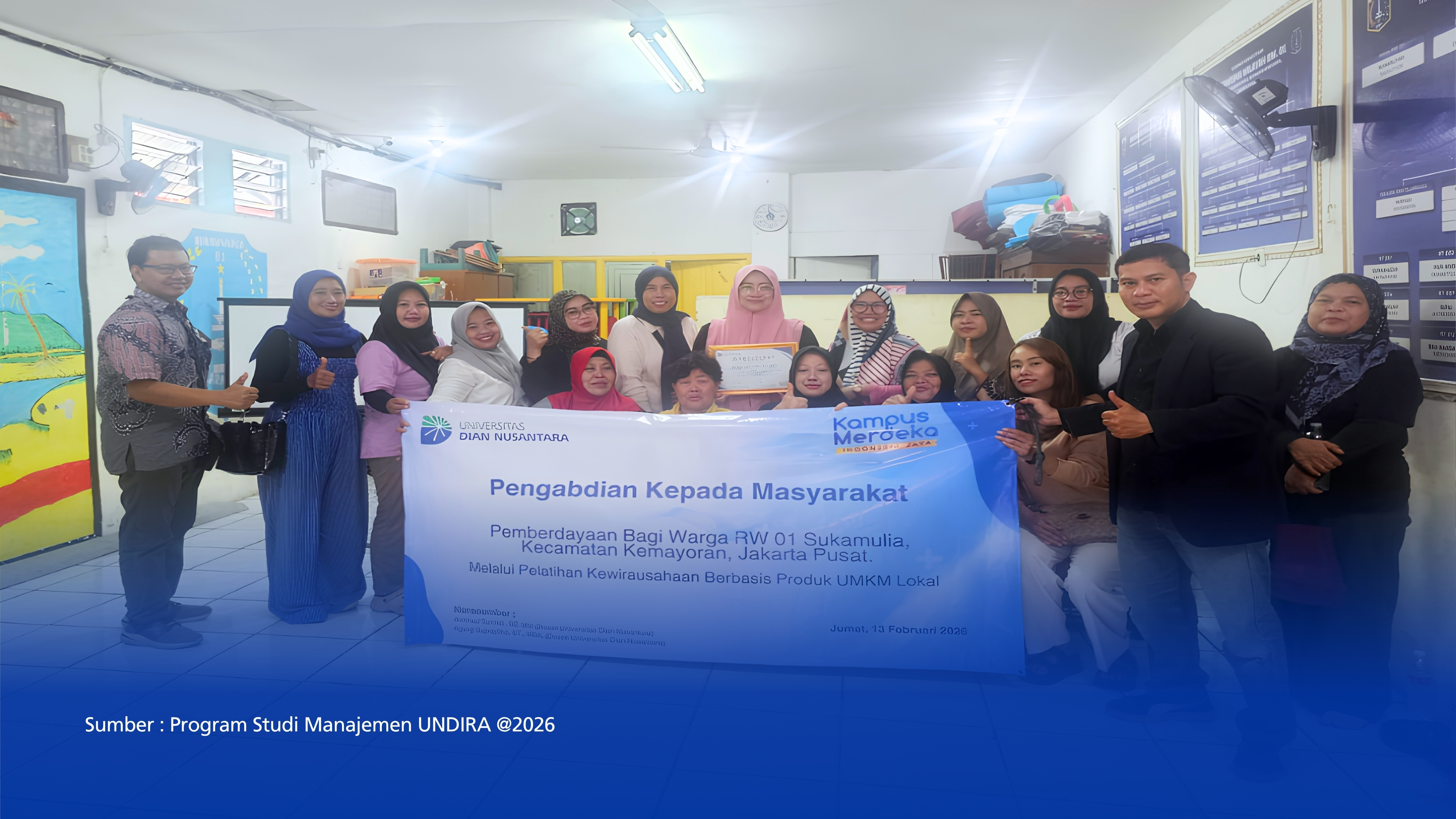
Enhancing Competitiveness of Local MSMEs – Management Study Program Lecturers at UNDIRA Conduct Community Service for Residents of Kemayoran, Central Jakarta
Read more
Campus Tanjung Duren
Jln. Tanjung Duren Barat II No. 1
Grogol, Jakarta Barat. 11470
Campus Green Ville
JIn. Mangga XIV No. 3
Campus Kranggan
Jln. Raya Kranggan, No.6,
Jatiraden, Kec. Jatisampurna, Bekasi. 17432


