

Article

Metadata vs Data: What Are the Differences? Understanding the Role of Metadata Management in Information Systems


 By :
By : 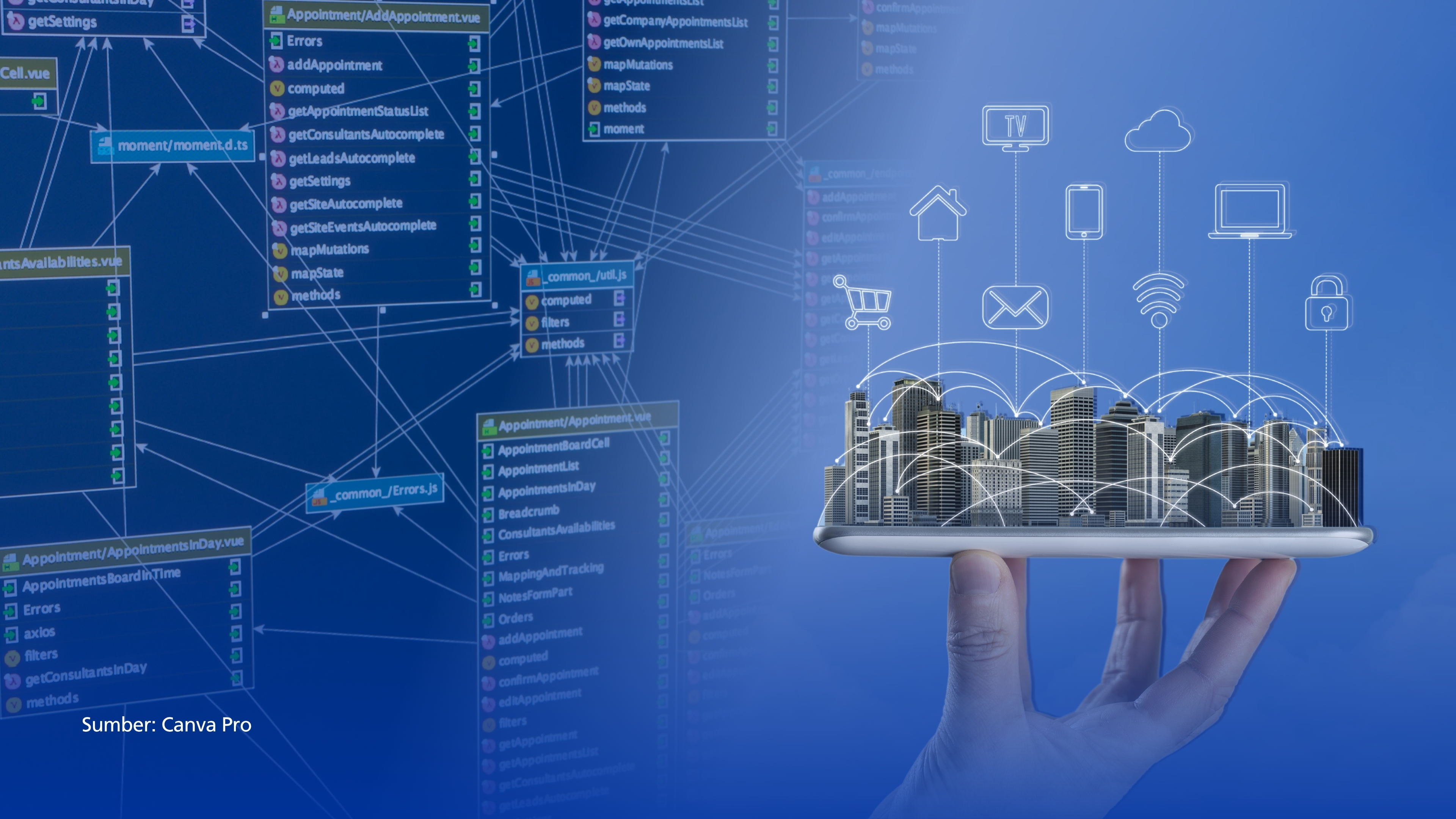
Entering the era of data-driven decision-making, data — which essentially consists of objective raw facts — has become a fundamental element capable of driving policies across various industrial sectors while also fostering innovation. This is especially evident in the development of the Internet of Things, where the flow of data exchange has reached its peak.
At this point, we understand what data is and how it interacts to create integrated ecosystems around us. However, in its basic form, data often consists of “raw” information that lacks specific context. Alongside rapid technological advancement and digitalization, the volume of generated data has become increasingly complex, making it more difficult to locate datasets that suit particular needs.
For example, when browsing a digital library website, users are presented with a landing page containing numerous book collections. Similarly, when reviewing a photo gallery after capturing several images, users are shown a timeline containing all stored photo files. This is where metadata becomes highly important.
In addition to data as the primary source of information, there is also a layer known as “data about data” — in simple terms, this is metadata. Metadata provides more detailed information and specific context about a particular dataset, such as file type, device name, publication year (for books), file location, recent article tables, and more.
Metadata plays a significant role in simplifying content governance and database management. By structuring and detailing information systematically, metadata enables repositories to organize data more effectively and makes information easier to process and retrieve. Data and metadata are closely interconnected; metadata cannot function without the foundational information contained within data itself.
For instance, when UNDIRA students take a picture, the image file does not only contain the photo name and format. A file named Tree.jpg may also include additional details such as the time the photo was taken, the camera model used, and the image resolution — these additional attributes are what we call metadata.
The implementation of metadata can also be seen in Machine Learning, Artificial Intelligence (AI), and the OAI-PMH protocol (Open Archives Initiative Protocol for Metadata Harvesting), where metadata is utilized as part of a procedural system to retrieve, process, and manage metadata from various digital repositories automatically.
Generally, OAI-PMH requires resources stored within structured record sets, each containing unique identifiers. This allows the protocol to recognize file compatibility and format types while improving overall system performance. In addition, repositories are needed as data banks so that OAI-PMH can access archived datasets. Lastly, there is a Harvester component responsible for retrieving and displaying datasets according to user needs. Without a harvester, data would remain stored but inaccessible.
In short, the OAI-PMH protocol simplifies data distribution through well-structured database systems. Its implementation can be found in library operating systems, journal indexing platforms such as SINTA and GARUDA, as well as Google Scholar.
Amid the rapid pace of digital transformation, understanding data and metadata has become an essential skill not only for technology practitioners but also for professionals across modern industries. Well-structured data management enables organizations to make more accurate decisions, accelerate information distribution, and develop efficient, integrated digital systems.
As part of its commitment to developing adaptive and competitive digital talent, the Informatics Engineering Program at Universitas Dian Nusantara (UNDIRA) continues to encourage mastery of data-driven technologies, ranging from information systems and artificial intelligence to metadata management and digital interoperability. Build the future of databases and digital innovation together with Informatics Engineering at UNDIRA!
Source of References:
Protokol Inisiatif Arsip Terbuka untuk Pengumpulan Metadata
Apa itu metadata? - IBM Official Website
Data vs Metadata: Key Differences, Challenges, and Best Practices
Press Contact :
Biro Humas & Sekretariat Universitas Dian Nusantara
Facebook : www.facebook.com/undiraofficial
Instagram : www.instagram.com/undiraofficial
Twitter : www.twitter.com/undiraofficial
www.undira.ac.id
Other
.jpg)
Simple Yet Impactful! Exploring the 5 Variations of Professional Image and Its Dimensions
Read more.jpg)
Harnessing the Energy of the Sky: The Grounding Mechanism in Protecting Infrastructure from Lightning Strikes
Read more
Dian Nusantara University Inaugurates Communication Science Laboratory
Read more
Campus Tanjung Duren
Jln. Tanjung Duren Barat II No. 1
Grogol, Jakarta Barat. 11470
Campus Green Ville
JIn. Mangga XIV No. 3
Campus Kranggan
Jln. Raya Kranggan, No.6,
Jatiraden, Kec. Jatisampurna, Bekasi. 17432


