

Article

Not Merely Profit-Generating Machines: Cultivating Courage, Autonomy, and Innovation on International Workers’ Day


 By :
By : 
When we look out the window and see someone working under the scorching sun for wages below the minimum standard, or encounter roles that compel individuals to compromise their integrity, we are prompted to ask: where has the principle of “just and civilized humanity” gone today?.
The commemoration of International Workers’ Day, or May Day, observed on May 1, 2026, should not focus solely on demands concerning minimum wage levels or job titles. Rather, it ought to emphasize the existential presence of workers—so often overlooked in favor of moral compliance and institutional loyalty.
In reassessing the meaning of “workers’ welfare,” we cannot detach it from the concept of equality proposed by Karl Marx in the 19th century. At the time, Marx argued that industrial capitalism would gradually give rise to social conflict between the owners (bourgeoisie) and the workers (proletariat).
With this in mind, it is crucial to understand that workers are not merely profit-generating instruments for institutions or industries. They are individuals with aspirations, a need for autonomy, and the desire to innovate freely—despite a work culture that often conditions us to equate our jobs with our identities, both within family and social spheres.
Amid the rapid advancement of technology and artificial intelligence—developments that undeniably pose challenges for workers, particularly in the creative industries—we must also remember that work is, at its core, a realization of identity. It is a space where fresh ideas should not only be voiced but also recognized, thereby fostering new discourse around mutual respect across professions, even as technology increasingly dominates both thought and market dynamics.
For some of us, reflecting on May Day also means acknowledging that, amidst 9-to-5 routines or even 24-hour work cycles (as experienced by ride-hailing drivers, sales administrators, or IT support staff), it is equally important to build a “small sanctuary” in our lives—one that sustains mental well-being and ensures a sustainable way of living.
Ultimately, the observance of International Workers’ Day must transcend mere normative demands. It is a call to fundamentally transform work culture. Companies and policymakers must be willing to take proactive steps in creating a work ecosystem that not only provides rewards but also allows workers the space to live, breathe, and create freely.
Source of References:
Post-Mortem Humanisme - Memaknai Keberadaan di Era Modern - Ardianzy
Marxisme dan Kapitalisme dalam Prespektif Kemanusiaan: Sebuah Analisis Kritis - Kompasiana
Press Contact :
Biro Humas & Sekretariat Universitas Dian Nusantara
Facebook : www.facebook.com/undiraofficial
Instagram : www.instagram.com/undiraofficial
Twitter : www.twitter.com/undiraofficial
www.undira.ac.id
Other
Advancing Quality Education for All, UNDIRA Opens Recruitment for Full-Time Lecturers
Read more
Not a Trivial Matter: Recognizing and Preventing the 'Time Bomb' of Bullying in Educational Environments
Read more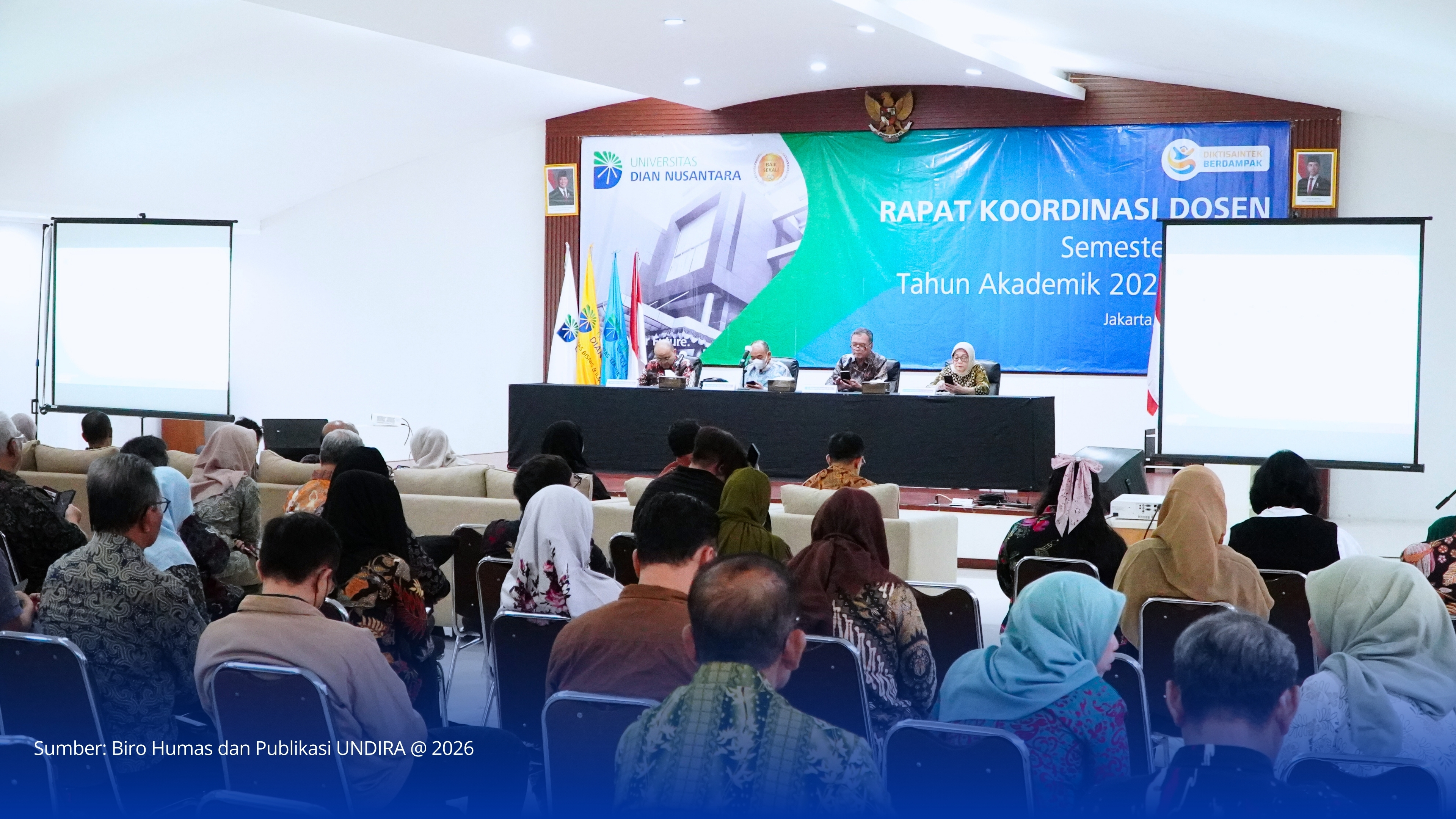
Strengthening the Path Toward Excellence: UNDIRA Emphasizes Quality Improvement in the Faculty Coordination Meeting for the 2025/2026 Academic Year
Read more
Campus Tanjung Duren
Jln. Tanjung Duren Barat II No. 1
Grogol, Jakarta Barat. 11470
Campus Green Ville
JIn. Mangga XIV No. 3
Campus Kranggan
Jln. Raya Kranggan, No.6,
Jatiraden, Kec. Jatisampurna, Bekasi. 17432


