

Article

Similar Yet Distinct: Recognizing the Difference Between Information Systems and Informatics


 By :
By : .jpg)
The presence of Information Technology has now driven development across various sectors of human life, including strategic sectors such as banking, healthcare, and education. The rapid progress of technology is inextricably linked to the high demand for competent Human Resources (HR) in the IT field.
The growing demand for IT professionals is directly proportional to the increasing interest in Information Technology majors today. Within the IT field itself, we encounter several specializations, such as Information Systems and Informatics. To provide a clearer picture for Kawan UNDIRA (UNDIRA Friends), this article will briefly discuss the differences between the two.
Although both generally cover a similar scope—namely programming basics, database management, and software development—they possess distinct study concentrations.
Information Systems is guided by the use of technology to solve existing problems based on available data. Furthermore, Information Systems is a study concentration that integrates several other disciplines, such as business, management, and economics.
Students are required to identify business needs and processes based on existing data. They then design systems suited to these needs with the primary goal of transferring information to the public in a way that is understandable and efficient. Some careers that can develop from Information Systems studies include UI/UX Designer, Data Analyst, and Data Engineer.
Conversely, Informatics focuses on the development of systems that possess novelty through computing solutions. The focus of Informatics studies is closely related to computing theory, programming, and technology development utilizing algorithms and programming languages such as C, Python, and JavaScript.
Beyond development duties, Informatics experts are also involved in system management and network engineering. They manage the acquisition of data to be processed and distributed while ensuring the system runs securely without threats of hacking from malicious parties. Career paths for Informatics graduates include Software Developer, Cybersecurity Specialist, Network Engineer, IT Infrastructure Management, and System Administrator.
To answer the industrial challenges of 2030, which point toward comprehensive technology utilization and development, the role of higher education is crucial. The Faculty of Engineering and Informatics at Universitas Dian Nusantara (FTI UNDIRA), through its Informatics Engineering Study Program, is fully committed to producing IT graduates who not only understand theory but are also competent and job-ready.
Through an industry-adaptive curriculum, UNDIRA offers specific specializations for Kawan UNDIRA interested in diving deep into the IT world, including concentrations in Software Engineering and Network Engineering. Equipped with these specific technical skills, UNDIRA graduates are expected to become the backbone of technological innovation and compete globally in the digital era.
Source of Information:
Interview with Director of Information Technology of UNDIRA, Mr. Giri Purnama, S.Pd., M.Kom.
(Danang Respati Wicaksono / Humas UNDIRA)
Press Contact :
Biro Humas & Sekretariat Universitas Dian Nusantara
Facebook : www.facebook.com/undiraofficial
Instagram : www.instagram.com/undiraofficial
Twitter : www.twitter.com/undiraofficial
www.undira.ac.id
Other
Metadata vs Data: What Are the Differences? Understanding the Role of Metadata Management in Information Systems
Read more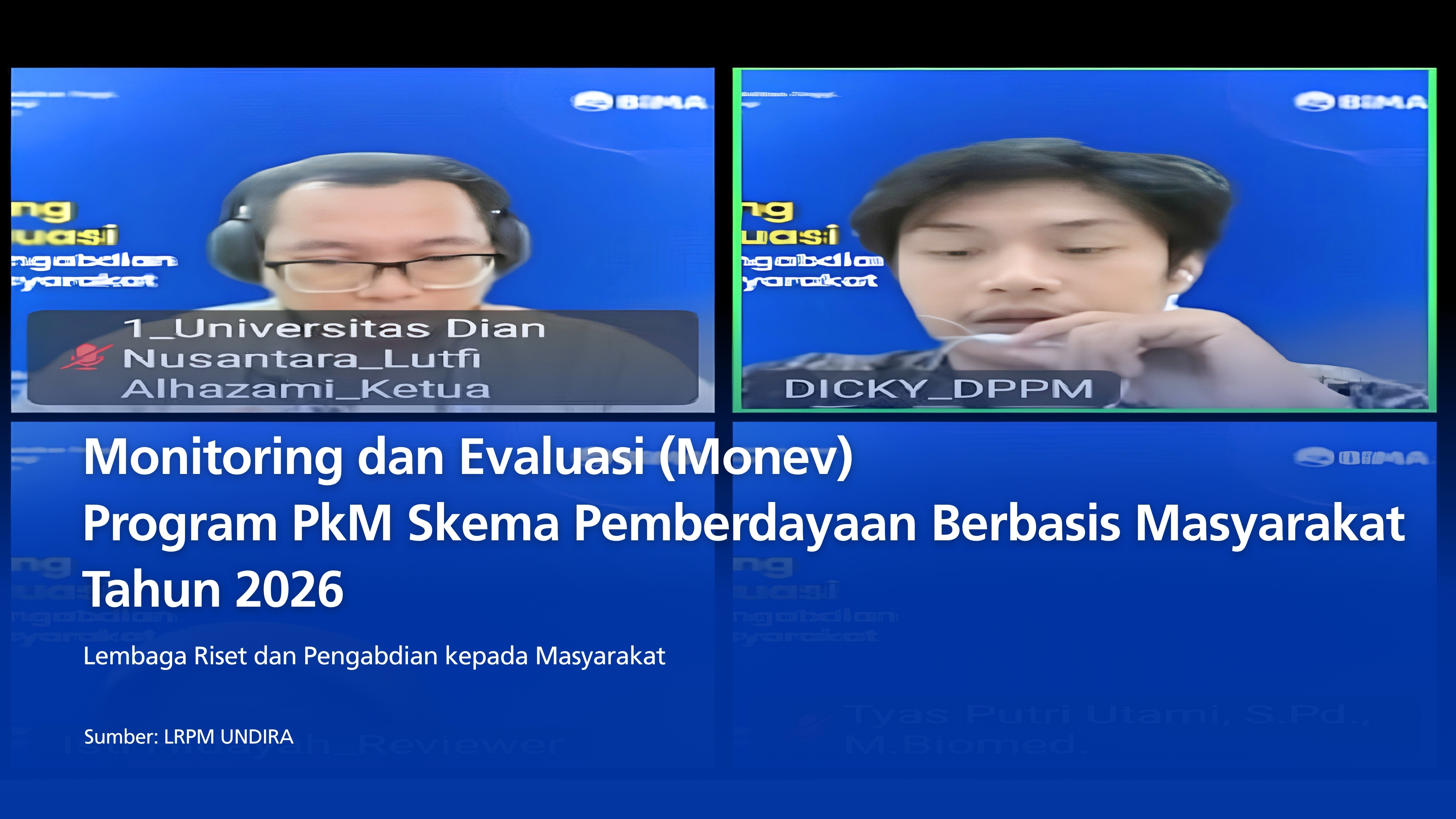
UNDIRA’s LRPM Participates in the 2026 Community-Based Empowerment Scheme Monitoring and Evaluation
Read more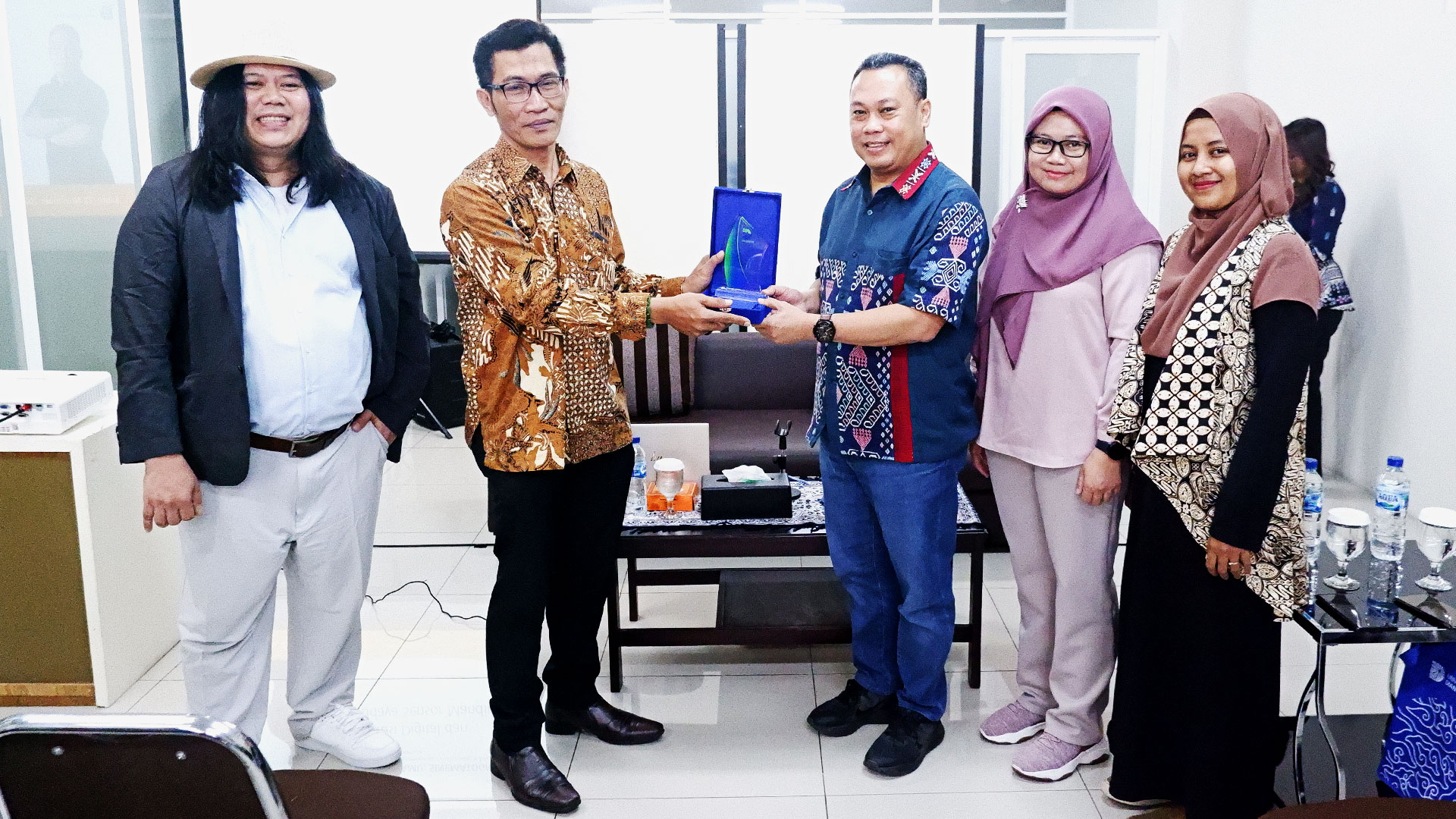
Guest Lecture: Digital Literacy and Self-Censorship Culture, Dian Nusantara University Communication Studies Program
Read more
Campus Tanjung Duren
Jln. Tanjung Duren Barat II No. 1
Grogol, Jakarta Barat. 11470
Campus Green Ville
JIn. Mangga XIV No. 3
Campus Kranggan
Jln. Raya Kranggan, No.6,
Jatiraden, Kec. Jatisampurna, Bekasi. 17432


