

Article

Psychology of Money and the Long-Term Plan: Learning from Warren Buffett’s Principles and Philosophy


 By :
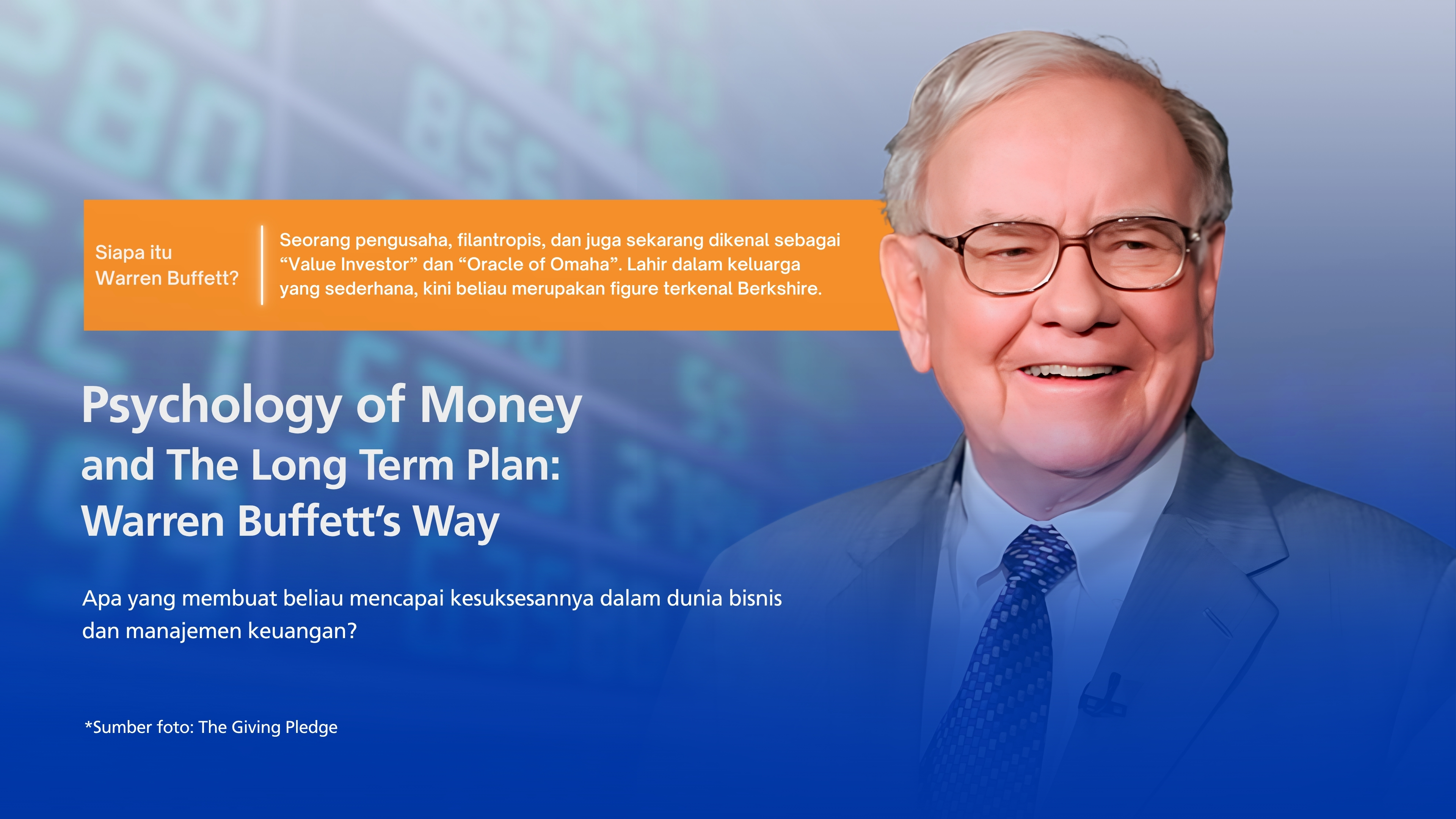
In the world of modern economics and investing, who hasn’t heard of Warren Buffett? He’s known for leading Berkshire Hathaway for more than six decades, for the sheer scale of his investments, and for turning a company that had nearly gone under into a giant worth over $1 trillion. But he’s just as well known for his far-sighted outlook. So who is Warren Buffett, really, and what philosophies brought him to where he is today? Let’s find out in the article below, UNDIRA friends.
Warren Edward Buffett, to give his full name, is one of the most successful American businessmen of the 20th and 21st centuries. He grew up in a fairly modest family. His father was both a member of the US Congress and a stockbroker; his mother was a homemaker, and his two sisters, Doris Buffett and Roberta Buffett, were both active philanthropists and humanitarians in their day.
Even as a boy, Warren was drawn to complex mathematics and quantitative analysis, thanks to his father, who introduced him to a wide range of studies on financial management, business, and investing.
When Warren was eight, his father began taking him along to his office, an invitation the young Warren jumped at. There he got to learn how the stock market works and what influences it. And the lessons didn’t stay theoretical: at 11, he bought his first shares and began to taste the rewards of investing. But his hunger to keep learning and doing business actually made him less and less keen on continuing his education. His father disagreed and kept urging him to go to college. As it turned out, that was exactly the right call, because it was in college that Warren came across a range of perspectives that would later change the course of his life.
While studying at the University of Nebraska, Buffett discovered The Intelligent Investor by Benjamin Graham, a Columbia Business School academic who also happened to be an economist and Buffett’s future mentor. The book challenged what Warren had always understood about stocks. They weren’t just symbols and numbers to be bought and traded, he learned. They should be treated as if you were running a real business, with the principle of compounding put to work. This was where Buffett gained the most valuable insight of his life: investing isn’t only about watching charts. It also means looking at things from the standpoint of financial value (value investing), and doing so rationally.
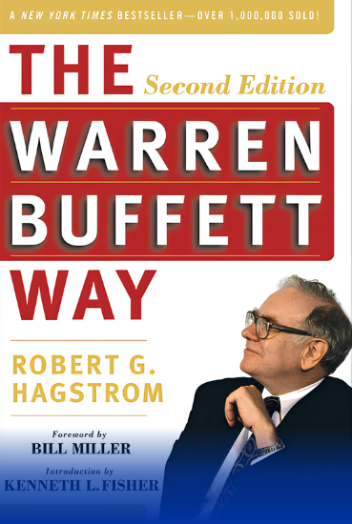
“Success in investing doesn’t correlate with IQ once you’re above the level of 125. Once you have ordinary intelligence, what you need is the temperament to control the urges that get other people into trouble in investing,” Warren Buffett said in his book, The Warren Buffett Way.
In 1958, after his time at Graham’s firm, Buffett found a new source of insight in Common Stocks and Uncommon Profits by Philip Fisher, a book that offers a forward-looking approach to investing. From it, Buffett learned that investors also need to look at a company’s operating performance and regular financial statements to judge whether it’s worth investing in. In Fisher’s view, no amount of rising share prices will deliver the best results if the company’s track record and finances aren’t growing steadily too. That is the long-term plan.
From these two viewpoints, Buffett eventually realized that being good at reading data isn’t enough. What really decides whether someone succeeds at investing is strategy and psychological strength. To him, a reliable investor isn’t someone busy spreading money across lots of places or getting swept along by public opinion. It’s someone willing to take the time to study carefully and build the right strategy. Armed with that understanding, he was able to move forward at his own pace.
“I can’t be involved in 50 or 70 things. That’s a Noah’s Ark way of investing - people would end up looking after a zoo at that point. I like to put meaningful amounts of money in a few things and we know the answers,” Warren Buffett said.
UNDIRA friends, the thinking and philosophy of a genius like Warren Buffett teach us that success in the stock market isn’t decided by intelligence alone. It also comes from a clear mind and plenty of experience, whether gained by watching other investors or through your own. A smart success, in the long run, is born from understanding alongside consistency of self and the world.
Sources of Reference:
Hagstrom, R. G. (2004). The Warren Buffett way (2nd ed.). John Wiley & Sons.
Investor Center, YouTube - Warren Buffett: 90 Years of Investment Wisdom Summed Up in 15 Minutes (2021)
(Danang Respati Wicaksono / Humas UNDIRA)
Press Contact :
Biro Humas & Sekretariat Universitas Dian Nusantara
Facebook : www.facebook.com/undiraofficial
Instagram : www.instagram.com/undiraofficial
Twitter : www.twitter.com/undiraofficial
www.undira.ac.id



Campus Tanjung Duren
Jln. Tanjung Duren Barat II No. 1
Grogol, Jakarta Barat. 11470
Campus Green Ville
JIn. Mangga XIV No. 3
Campus Kranggan
Jln. Raya Kranggan, No.6,
Jatiraden, Kec. Jatisampurna, Bekasi. 17432


