

Article

Cookies and Digital Personalization: How Do Websites Recognize Their Users, and What Are the Different Types?


 By :
By : 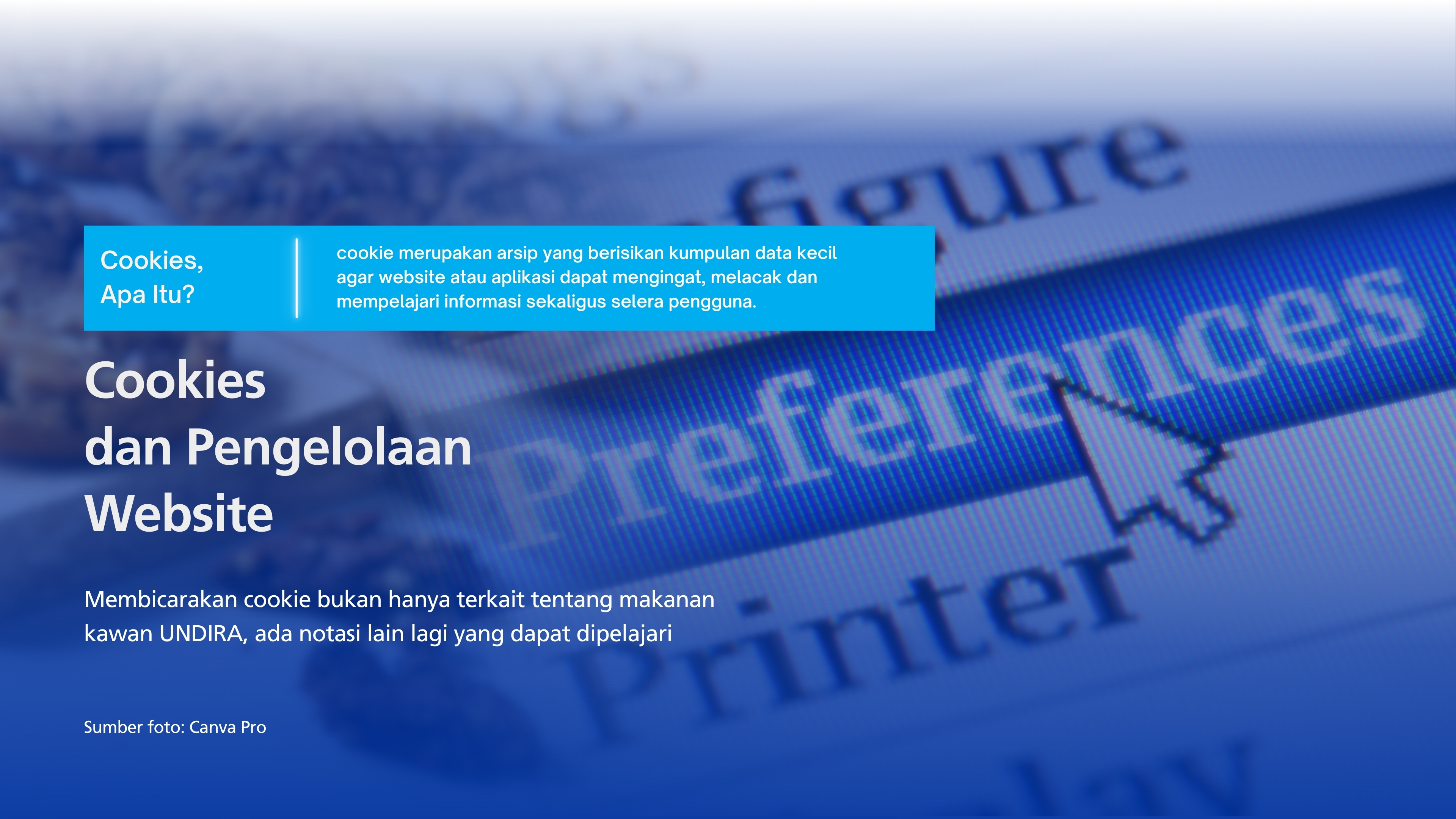
When exploring different websites, Kawan UNDIRA, you have probably come across a message that reads, “Our website uses cookies to manage information and tailor content to your preferences.” But what exactly are cookies, and what role do they play in website management? Let’s take a closer look, Kawan UNDIRA.
Essentially, cookies are small data files that allow websites or applications to remember user information, track certain activities, and store preferences. This helps create a more convenient and personalized experience for users when browsing websites or using particular applications.
Cookies work when we visit a website through a browser. Initially, the browser sends an HTTP request to the website’s server to retrieve the requested page. The server then responds with an HTTP response, which may include instructions to store small pieces of data, such as a session ID or user preferences, in the browser. At this stage, if the user grants permission for the website to collect or store data through cookies, the browser will save the relevant cookie data according to the user’s consent settings, such as allowing only essential cookies. Conversely, if users block cookies entirely, the website may be unable to retain certain preferences or personalize content during subsequent visits.
Now, let’s look at what happens when Kawan UNDIRA allows cookies to be stored and later returns to the same website. During the next request, the browser automatically includes the relevant cookie data in the Cookie HTTP header. This allows the server to recognize the browser, maintain login sessions, remember preferences such as dark or light mode, and deliver advertisements or content tailored to the user’s interests.
Although cookies can help personalize content based on user preferences, Kawan UNDIRA should remember that cookies do not work in the same way as machine learning. According to Bias Yulisa Geni, S.Kom., M.Kom., a lecturer in UNDIRA’s Informatics Engineering Study Program, cookies primarily record information about users’ interactions with content, including what they like and how long they typically spend watching certain content. Machine learning, on the other hand, takes things a step further. Once data has been collected from servers and other sources, machine learning can analyze and process that raw data to identify patterns and generate predictions.
Beyond their role in storing information, cookies also come in several different types, Kawan UNDIRA. Here are some of the most common ones:
-
Session Cookies
Session cookies temporarily store information in the browser’s memory while a user is browsing a website. Once the browser is closed, these cookies are generally removed, and the temporary session data is no longer retained.
Typically, session cookies are used by online marketplaces and other websites that require users to log in. They help maintain a user's session through a session ID, allowing the website to recognize the user as they navigate between pages without requiring them to log in repeatedly.
-
Persistent Cookies
Unlike session cookies, persistent cookies remain stored in the browser beyond a single browsing session, usually until they expire or are deleted. They allow websites to remember certain preferences and settings even after Kawan UNDIRA turns off a device or closes the browser.
These cookies can be removed manually through the browser’s data-clearing options. This is particularly important when selling or handing over a device to someone else, as saved website data may expose personal information if it is not properly cleared.
-
Third-Party Cookies
These cookies are typically associated with third-party content embedded in a webpage, such as advertisements, social media buttons, or embedded videos. Because the same third-party service may appear across multiple websites, it can potentially track Kawan UNDIRA’s browsing activity across different sites and use that information to deliver personalized advertisements.
This tracking capability is one reason third-party cookies have raised concerns about user privacy. In response, some browsers have introduced restrictions or blocked certain third-party cookies by default. Kawan UNDIRA can also review the available privacy settings in their browser to manage or disable them.
So, Kawan UNDIRA, cookies are much more than just pop-up notifications that we click “Accept” on without a second thought. They can make browsing more convenient and personalized, but they also come with privacy risks that deserve our attention.
From now on, let’s be more mindful when browsing the internet. Take a moment to review the cookie options that appear, adjust permissions according to your needs, and regularly clear your browser data, especially when using a shared device or preparing to sell one. That way, we can enjoy the convenience of the digital world while taking better care of our personal information.
Sources of Reference:
Cookies Adalah? Pengertian, Fungsi, Jenis, dan Cara Kerjanya
Bagaimana Cara Kerja Cookie dan Session?
(Danang Respati Wicaksono / Humas UNDIRA)
Press Contact :
Biro Humas & Sekretariat Universitas Dian Nusantara
Facebook : www.facebook.com/undiraofficial
Instagram : www.instagram.com/undiraofficial
Twitter : www.twitter.com/undiraofficial
www.undira.ac.id




Campus Tanjung Duren
Jln. Tanjung Duren Barat II No. 1
Grogol, Jakarta Barat. 11470
Campus Green Ville
JIn. Mangga XIV No. 3
Campus Kranggan
Jln. Raya Kranggan, No.6,
Jatiraden, Kec. Jatisampurna, Bekasi. 17432


