

Article

Understanding Bonds and Sukuk: Their Mechanisms and Key Differences


 By :
By : 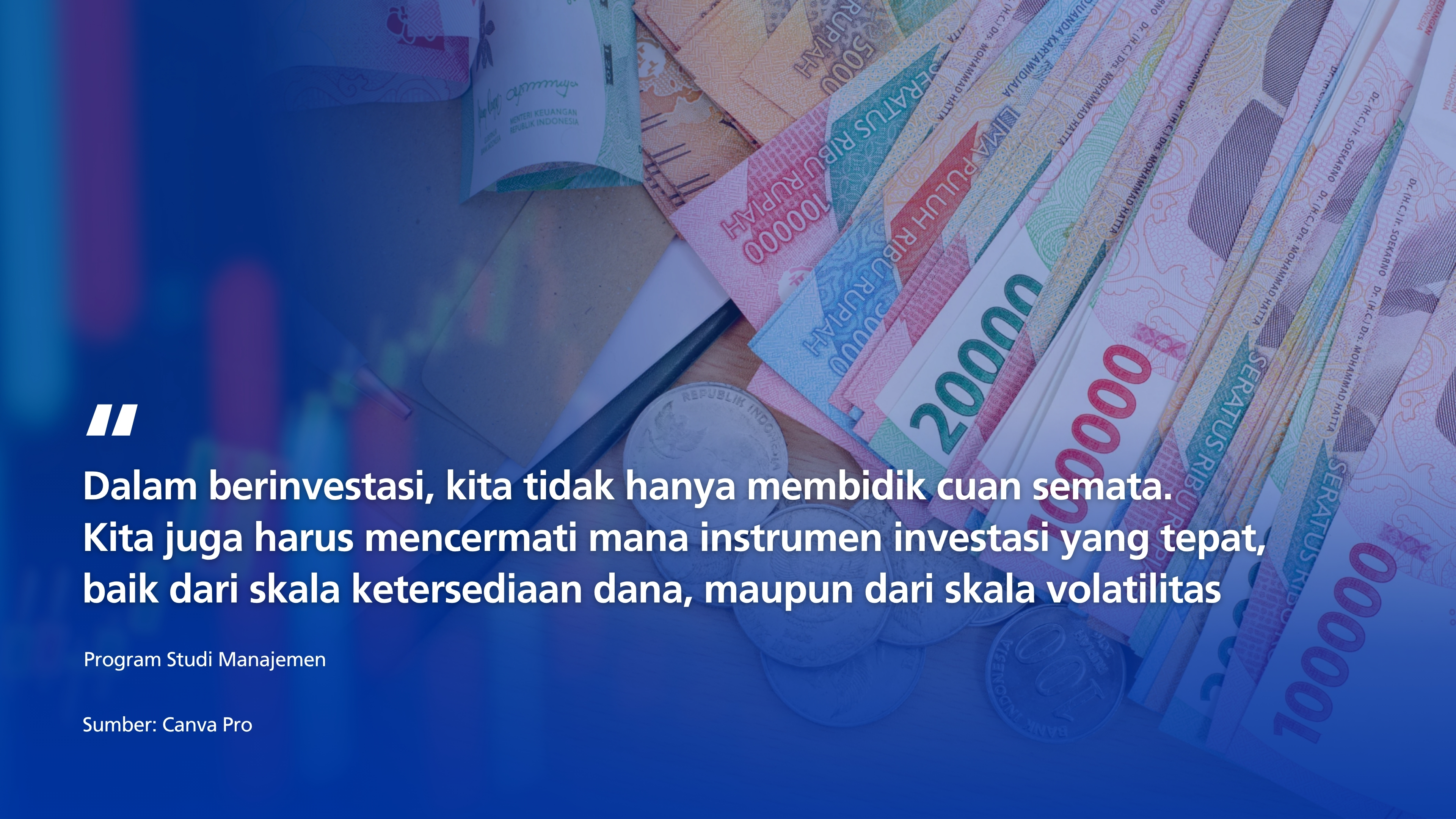
Financial freedom and earning additional income through investing have certainly become aspirations for many members of Generation Z today. When we hear the word “investment,” we often immediately imagine substantial returns from whatever instrument we choose. However, as we all understand, investing is far removed from the stereotypical idea of “making money quickly” or “earning easy profits.” In recent times, the global investment climate has become increasingly volatile, largely due to heightened uncertainty around the world. In other words, various investment instruments have become less stable and more susceptible to market fluctuations.
Even so, despite the uncertainty surrounding global markets, there are two types of investment instruments generally associated with relatively lower volatility and strong safety features: sukuk and bonds. Unlike several other investment instruments, such as stocks, cryptocurrencies, and even gold, sukuk and bonds generally offer relatively more stable returns.
At their core, both instruments are forms of fixed-income investment, meaning that the returns they provide are generally more predictable and stable. Both operate through the issuance of investment securities by governments or certain institutions, which then provide investors with periodic fixed income until the agreed maturity date, or tenure. Once the investment reaches maturity, the initial principal is also returned in full, provided the funds are held until maturity.
Although sukuk and bonds share broadly similar mechanisms, there are several fundamental differences in terms of their legal foundations and governance that Kawan UNDIRA should take note of.
First, it is important to understand that the two instruments are built on different principles. Sukuk follows Sharia-based, asset-backed investment principles, while conventional bonds are based on debt-based investment.
Sukuk uses Sharia-compliant contracts, which may be structured around lease agreements, profit-sharing arrangements, asset ownership, or partnerships, to represent an investment made by investors. In addition to being regulated by the Financial Services Authority (Otoritas Jasa Keuangan or OJK), sukuk is also subject to oversight by a Sharia Supervisory Board (Dewan Pengawas Syariah or DPS) to ensure that the investment remains compliant with Islamic principles and avoids elements of riba. In terms of diversification or the sectors in which funds may be invested, sukuk is generally somewhat more restrictive because it limits exposure to sectors that have been approved in accordance with DPS guidelines.
On the other hand, bonds are broadly considered a “debt contract” between the issuer and the investor. They generally do not impose specific restrictions on the sector or type of project being financed, as long as the issuance remains under OJK supervision and complies with applicable regulations. This makes bonds relatively more flexible than sukuk. In terms of returns, bonds typically provide investors with interest in the form of coupons, which are paid periodically throughout the investment tenor.
For example, suppose Kawan UNDIRA invests (x) amount of Rupiah in a particular institution through a bond instrument with a three-year tenor and an annual coupon rate of 7%. Over the three years, you would receive coupon payments based on the 7% annual rate, while the full principal would be returned at the end of the tenor, subject to the terms of the investment.
Bonds also come in different forms, Kawan UNDIRA. Among them are government-issued bonds, such as Obligasi Ritel Indonesia (ORI), as well as corporate bonds issued by companies.
Understanding investment instruments and the level of volatility associated with each of them is an important strategic step for today’s younger generation. Amid ongoing geopolitical tensions and global uncertainty, having the knowledge to identify suitable investment instruments can help Kawan UNDIRA move one step closer to achieving financial freedom. Through the Management Study Program, students can explore capital markets and investment analysis comprehensively, from understanding the characteristics of various investment instruments and how they are traded to learning how to interpret market conditions amid global uncertainty.
For friends of UNDIRA who want to invest more wisely instead of simply following trends, or who aspire to become capable financial analysts and informed investors, come and build your expertise with the Management Study Program at UNDIRA. Financial freedom is not about making quick profits. It is about building solid knowledge, making informed decisions, and developing the right skills. And that journey can begin right from the classroom today!
(Danang Respati Wicaksono / Humas UNDIRA)
Press Contact :
Biro Humas & Sekretariat Universitas Dian Nusantara
Facebook : www.facebook.com/undiraofficial
Instagram : www.instagram.com/undiraofficial
Twitter : www.twitter.com/undiraofficial
www.undira.ac.id
Other
Strengthening Quality Publication and Research, UNDIRA Holds Interactive International General Lecture with Universiti Malaysia Sarawak (UNIMAS)
Read more
Managing the Gears of Connectivity: Understanding IT Management
Read more.jpg)
Voicing Ecological Crisis, UNDIRA English Literature Students Launch
Read more
Campus Tanjung Duren
Jln. Tanjung Duren Barat II No. 1
Grogol, Jakarta Barat. 11470
Campus Green Ville
JIn. Mangga XIV No. 3
Campus Kranggan
Jln. Raya Kranggan, No.6,
Jatiraden, Kec. Jatisampurna, Bekasi. 17432


