

About Campus

Enhancing English Fluency, UNDIRA's English Literature Program Holds AI-Based Language Training for Students at Bunda Hati Kudus Junior High School Jakarta


 By :
By : 
Language, as the primary medium of communication, has become an essential bridge connecting people, cultures, and knowledge across the globe in today's era of globalization. As one of the world's universal languages, mastering English now extends far beyond memorizing vocabulary. It also requires proficiency in key elements such as intonation, articulation, pronunciation, and word stress, all of which often present subtle yet significant challenges for learners.
According to research on communicative competence by Celce-Murcia et al. (2010), accurate pronunciation and appropriate intonation are crucial not only for delivering clear messages but also for improving intelligibility, communication fluency, and learners' confidence when speaking English.
Despite its importance, many students continue to face obstacles in developing their English-speaking skills. Limited instructional time and the lack of learning systems capable of providing continuous, personalized feedback remain among the primary factors hindering language proficiency, particularly among adolescents and school-aged learners.
Recognizing these challenges, a team of lecturers and students from the English Literature Study Program, in collaboration with the Management Study Program at Universitas Dian Nusantara (UNDIRA), organized a Community Service Program (PkM) for students of Bunda Hati Kudus Junior High School Jakarta.
The program began with a Pre-Test involving 25 junior high school students to assess their baseline competency across four fundamental components of English speaking. The initial assessment revealed that many participants struggled to pronounce several English phonemes that do not exist in Bahasa Indonesia, including /θ/, /ð/, /v/, and /æ/. The evaluation also showed that students frequently applied Indonesian speech patterns and intonation when pronouncing English words, affecting the naturalness and accuracy of their spoken English.
To create a more engaging and innovative learning experience, the UNDIRA team adopted an AI-powered instructional approach by utilizing Automatic Speech Recognition (ASR) technology through the SpeechAce platform. According to the project team, SpeechAce was selected for its ability to analyze learners' spoken English in real time and provide continuous, interactive feedback through a scoring system based on four essential language-learning components: pronunciation, word stress, intonation, and fluency.
Following the training sessions, the UNDIRA Community Service team conducted a Post-Test to evaluate students' progress and compare the results with their initial performance.
The outcomes demonstrated significant improvements across all assessed competencies. In articulation, the percentage of students who correctly pronounced English phonemes increased from 36% to 84%, representing a 48-percentage-point improvement. Similar progress was observed in word stress, where accuracy rose from 40% to 88%. Students' ability to use appropriate intonation improved from 44% to 80%, while their fluency nearly doubled, increasing from 32% to 76%.
Equally noteworthy was the remarkable growth in students' confidence when speaking English in front of their classmates. The proportion of students who felt confident communicating in English increased from 48% to 92%, a gain of 44 percentage points. This finding highlights that effective spoken communication depends not only on linguistic competence but also on learners' confidence and willingness to actively use the language in authentic communication settings.
Although the results were highly encouraging, the project team acknowledged several areas for future improvement, particularly in strengthening the evaluation framework. They suggested that integrating SpeechAce with Learning Management Systems (LMS) or incorporating gamification elements could further personalize the learning experience and sustain students' motivation.
Overall, this collaborative Community Service initiative demonstrates the promising potential of AI-based language learning as an effective strategy for improving English proficiency among junior high school students. The program is expected to serve as a sustainable model for strengthening English literacy and communication skills while supporting the broader digital transformation of education in Indonesia.
Source of Reference:
Press Contact :
Biro Humas & Sekretariat Universitas Dian Nusantara
Facebook : www.facebook.com/undiraofficial
Instagram : www.instagram.com/undiraofficial
Twitter : www.twitter.com/undiraofficial
www.undira.ac.id
Other
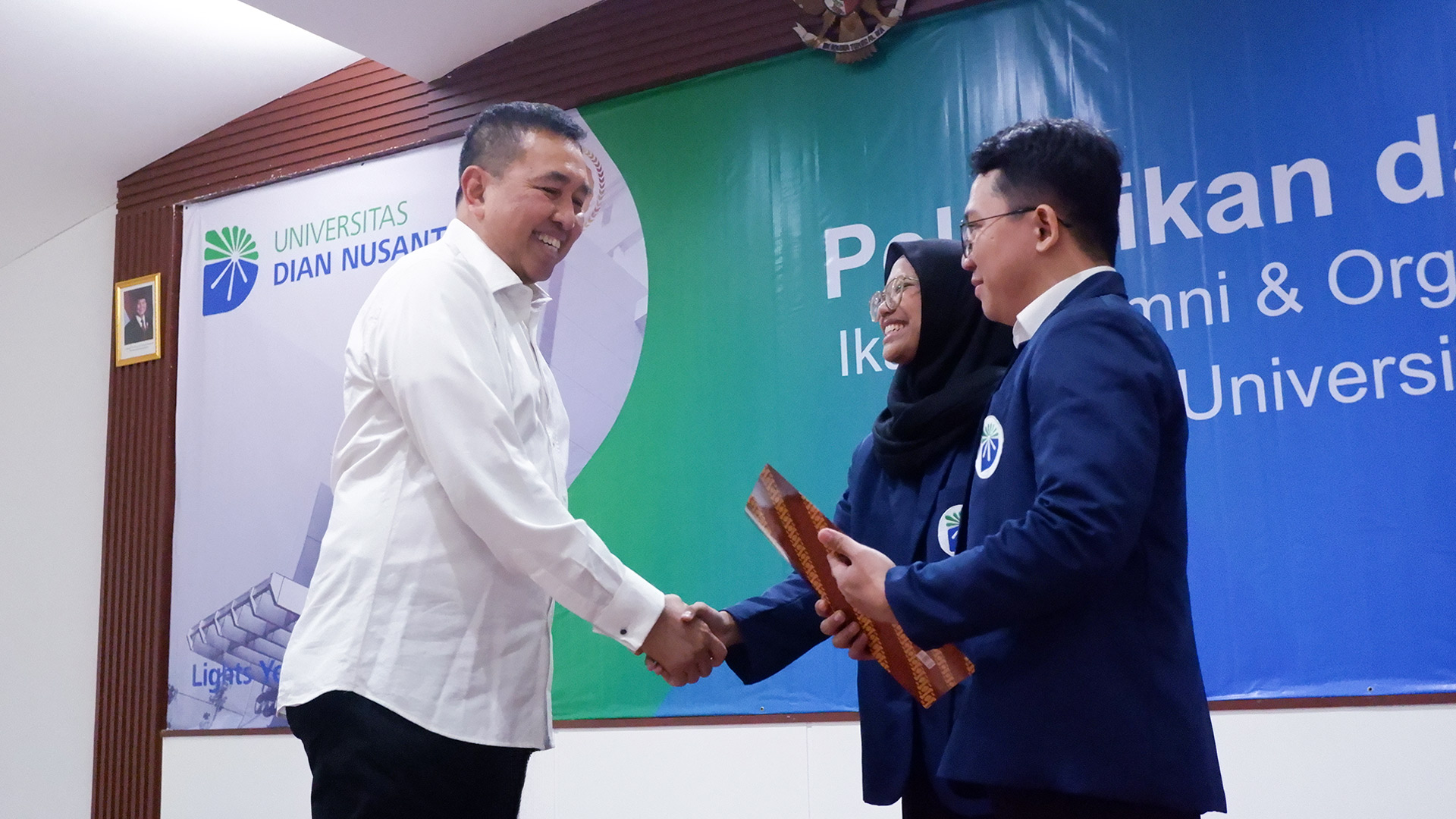
Passing the Torch to Next Generation: UNDIRA Inaugurates BEM, BPM, HIMA, and Student Activity Units for the 2025/2026 Academic Year
Read more
Business Writing and Technical Writing: The Differences Between Two Worlds
Read more.jpg)
Deepening Understanding of Stock Trends: UNDIRA Student Examines How Policy Dynamics Influence Issuer Performance
Read more
Campus Tanjung Duren
Jln. Tanjung Duren Barat II No. 1
Grogol, Jakarta Barat. 11470
Campus Green Ville
JIn. Mangga XIV No. 3
Campus Kranggan
Jln. Raya Kranggan, No.6,
Jatiraden, Kec. Jatisampurna, Bekasi. 17432


