

Article

Speculative Stocks: When Stock Prices No Longer Reflect a Company's True Value


 By :
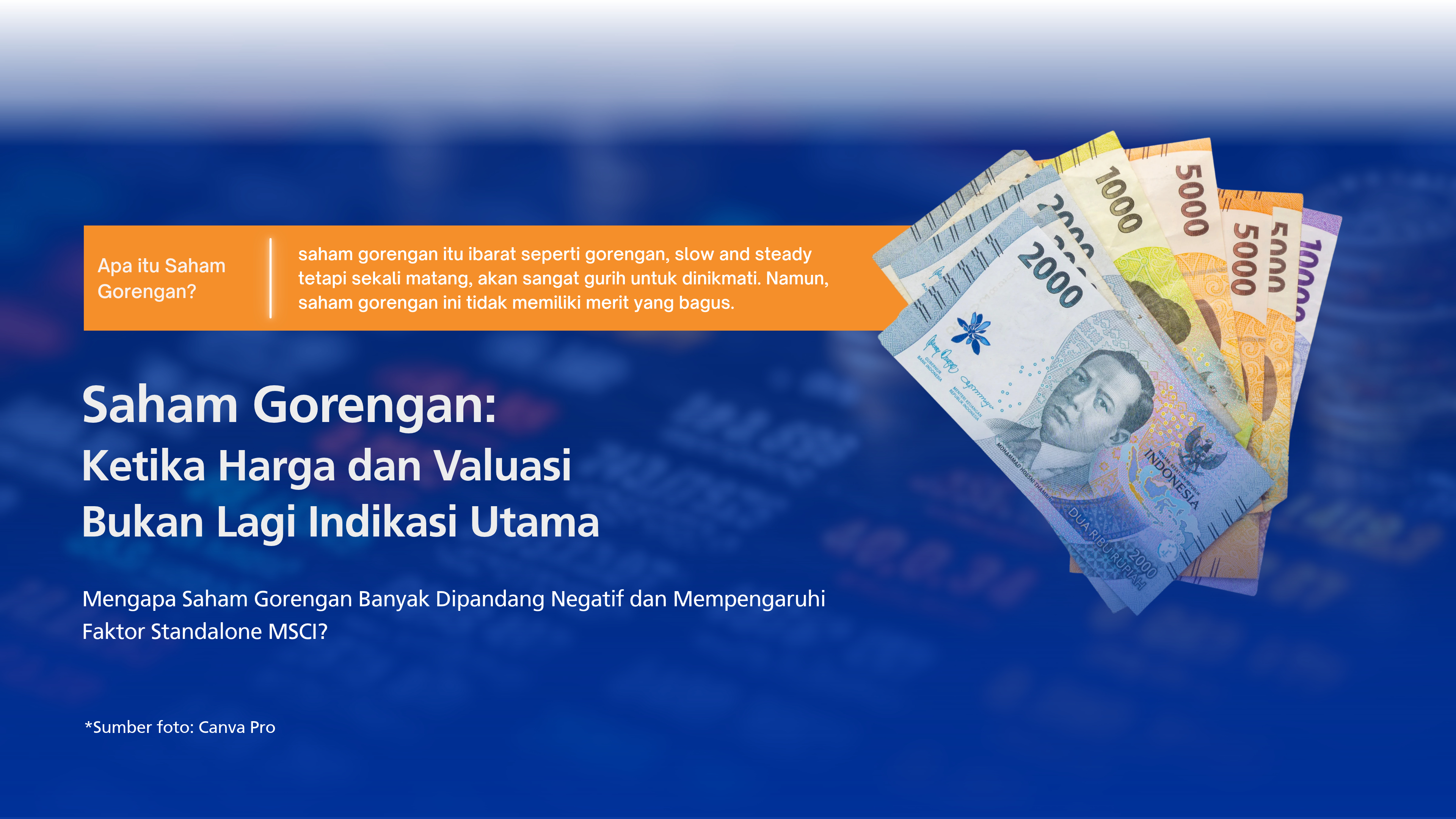
Recently, an interesting topic has been gaining attention in Indonesia's capital market. Kawan UNDIRA who frequently browse the internet, or at least keep up with news about Indonesia's stock market, may have come across discussions surrounding Morgan Stanley Capital International (MSCI) and its decision to classify Indonesia's market status as "Standalone." This development has contributed to a significant outflow of foreign investment. As a result, Indonesia is now making efforts to improve transparency, accountability, and the overall economic and capital market ecosystem.
These efforts were reflected in discussions at the 2026 National Leadership Meeting (RAPIMNAS) of the Indonesian Chamber of Commerce and Industry (KADIN). Among the topics that drew considerable attention were the so-called "saham gorengan," or artificially inflated stocks, and High Shareholding Concentration (HSC). But what exactly are speculative stocks, and how can their presence affect the overall health of Indonesia's capital market? Let's take a closer look, Kawan UNDIRA!
First, it is important to understand that "saham gorengan" is not an official financial term. Rather, it is a popular expression commonly used among investors. The term literally refers to fried snacks, drawing an analogy between stocks and food that can be deliberately prepared to make them look more appealing and tempting. In much the same way, certain stocks can be artificially driven up in price to attract investors.
In the capital market, speculative stocks can often be identified by sudden and significant price increases within a relatively short period, even when the company behind the stock has weak fundamentals or lacks strong financial performance. Another important point to consider is that the price movements of these stocks are often driven more by speculation, Fear of Missing Out (FOMO), rumors, insider trading, or the activities of certain parties rather than the company's actual performance. Such practices may also constitute violations of capital market regulations, including those stipulated in Law No. 4 of 2023 and Law No. 8 of 1995.
Now that we understand what speculative stocks are and how they operate, the next question is: how do they affect the overall health of our country's capital market?
To make this easier to understand, imagine speculative stocks as harmful microorganisms growing in the human digestive tract, potentially disrupting the way our digestive system functions. Over time, this can lead to instability and eventually weaken the body's overall condition. A similar situation can occur in Indonesia's capital market. The widespread presence of artificially inflated stocks can undermine market transparency, weaken accountability in the enforcement of capital market regulations and the conduct of listed companies, and ultimately damage Indonesia's credibility in the eyes of foreign investors.
So, what can investors do to avoid falling into the trap of speculative stocks? The first thing Kawan UNDIRA should understand is the importance of conducting thorough research before purchasing any stock. Financial indicators such as the Price-to-Earnings (P/E) Ratio, along with historical stock price movements and chart analysis, can provide valuable insights. You can also examine a company's business performance and financial statements to help determine whether its stock price is supported by solid fundamentals or driven primarily by speculation. Last but certainly not least, having a well-planned investment strategy and proper risk management is essential, especially if you are considering short-term trading strategies such as scalping.
The numbers displayed on a stock exchange screen do not always reflect a company's true value. Much like fried snacks that may look appetizing but are not necessarily healthy as a daily staple, speculative stocks may promise quick profits but can leave your investment portfolio with an unpleasant "stomachache" if approached without careful consideration.
Interested in exploring the world of capital markets and finance more deeply? The Management Study Program at Universitas Dian Nusantara (UNDIRA), which has earned an Excellent (Unggul) accreditation, is ready to be part of your academic journey. Through its Financial Management concentration, you will learn how to interpret financial statements, evaluate corporate performance, and develop investment strategies and management.
Sources of Reference:
Bank Sinarmas - Mengenal Saham Gorengan: Ini Ciri-Ciri dan Risikonya yang Perlu Dipahami Investor
Kadin Indonesia - Rapimnas Kadin 2026 Dimulai, Kadin Siapkan Tiga Rekomendasi Strategis Perkuat Ekonomi Nasional
BRI Reksadana Sekuritas - Saham Gorengan: Pengertian, Risiko, dan Cara Menghindarinya
Hukumonline - Dinamika Perkembangan Pasar Modal
(Danang Respati Wicaksono / Humas UNDIRA)
Press Contact :
Biro Humas & Sekretariat Universitas Dian Nusantara
Facebook : www.facebook.com/undiraofficial
Instagram : www.instagram.com/undiraofficial
Twitter : www.twitter.com/undiraofficial
www.undira.ac.id
Other

Navigating Your Career with Manners: UNDIRA Communication Studies Students Complete Batch 9 Table Manners Program
Read more
Get to Know: The Mechanism of Wireless Charging and How It Can Be a 'Silent Killer' for Your Devices
Read more
Bits of Programming: Is AI the Solution for Programmers Through Vibe Coding?
Read more
Campus Tanjung Duren
Jln. Tanjung Duren Barat II No. 1
Grogol, Jakarta Barat. 11470
Campus Green Ville
JIn. Mangga XIV No. 3
Campus Kranggan
Jln. Raya Kranggan, No.6,
Jatiraden, Kec. Jatisampurna, Bekasi. 17432


