

Article

Remakes and Remasters: How They Influence Literature and Storytelling


 By :
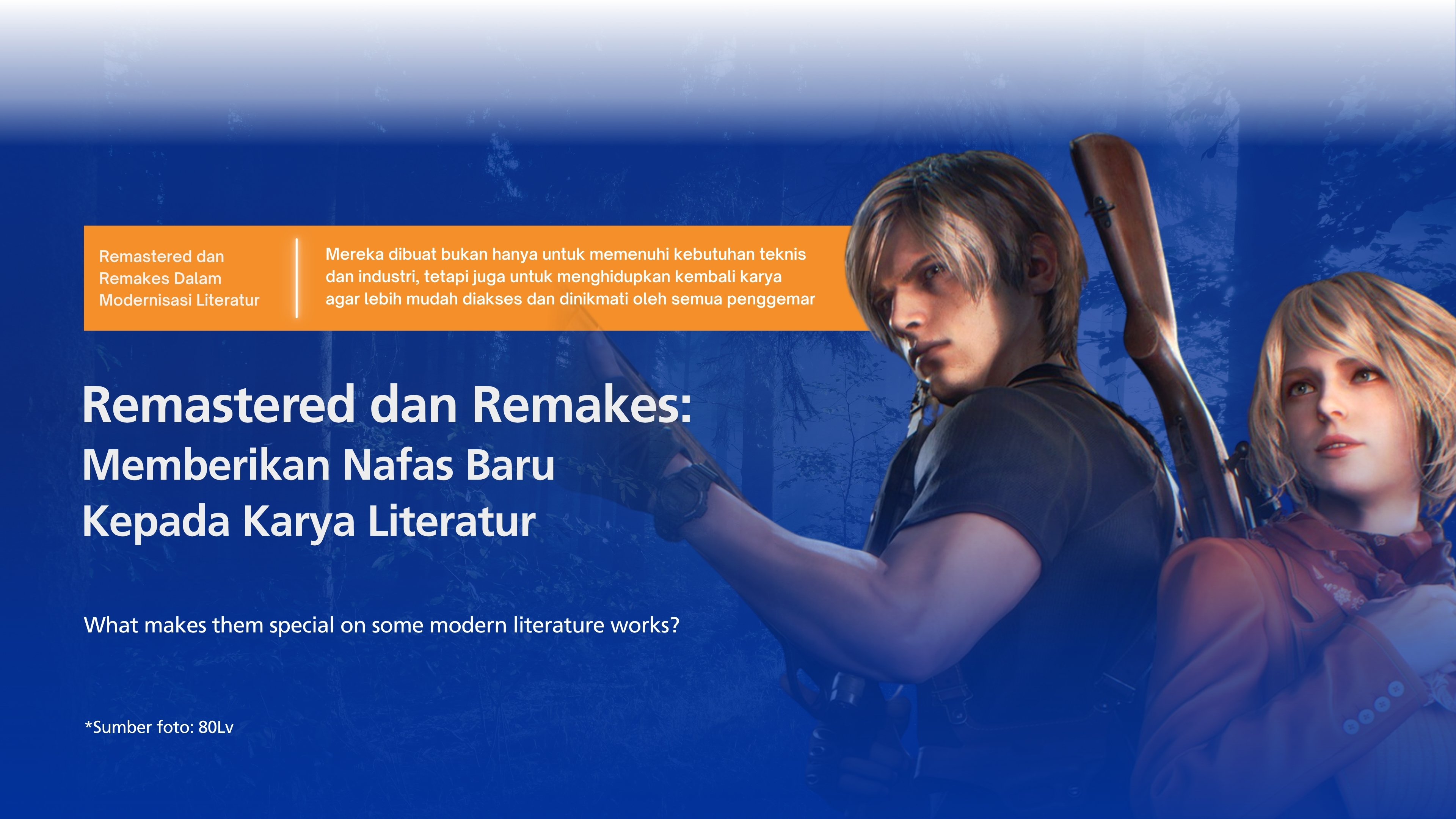
Just as teak wood becomes stronger with age, literature and the literary arts also hold a unique significance for those in the arts and humanities. When we enjoy a literary work, we are essentially not just engaging with the presentation of information, but also with how that work leaves a lasting impression on us. According to a study conducted by Osaka University of Arts in Osaka, Japan, and published in an Elsevier journal, the experience of engaging with literary content, particularly that which incorporates interactive elements, can influence the feedback received by those who engage with it. In this context, it is understood that the presentation and packaging of literature can shape a person’s perceptions.
However, as with most forms of art, many literary works are now gradually fading into obscurity as time goes on. Nevertheless, modernization, coupled with rapid technological advancements and digitization, is increasingly opening up opportunities for various literary works to be reimagined in formats that feel “fresh”, through methods such as “remakes” or “remastered” versions, UNDIRA friends.
More than just fulfilling technical and industry requirements and commitments, these two concepts are intended to revitalize literary works, open them up to new audiences, and offer fresh experiences, making them more welcoming and engaging for both longtime fans and newcomers, and to breathe new life into a wide range of works. Now, in the modern era, remakes and remasters can be found in various forms of media, such as films, music (particularly music with themes of romanticism, social criticism, and other forms of social emancipation), and even in interactive digital literature like video games.
Although they share a similar primary goal, remakes and remasters fundamentally take quite different approaches to revitalizing literary works. Remastering, often referred to as reimagining, aims to make physical improvements or add elements to a work without altering the substance of the text, the plot, or the spirit of the original work in any way. Remastering can be as simple as enhancing the audiovisual quality of a work. This is seen as a way to enhance the immersiveness of storytelling, which may previously have been hindered by technological limitations or a lack of understanding.
The remastering method can be seen in several works of classic literature, such as Peter and Wendy (1911) by J.M. Barrie, which was later revived as Peter Pan. Other examples of remastering can also be seen in simple case studies of enhancing the audiovisual quality of a work, such as the video games God of War Remastered and The Last of Us Remastered.
Now that we’ve grasped the essence of the remastering method, let’s move on to the realm of remakes. When we hear the word “remake,” our thoughts naturally turn to the phrase “re-make,” which means to create anew. Examining a study published in the Osaka University of Arts journal, we find a concept called "sakai-kan" or “worldbuilding,” and this concept is arguably one of the closest ways to define what a remake is.
Sakai-kan explains that by combining, harmonizing, and updating new elements within a literary work, a harmonious sense of novelty can be achieved without entirely eliminating the narrative present in the original work. This is the essence of a remake. Essentially, a remake serves to reconstruct the narrative, mechanical elements, and world-building, along with the characterization of each character, to create storytelling that is relevant and better suited to the sensibilities of the current generation. This also provides opportunities for writers and engineers to explore new ideas and perspectives in order to modernize these works.
We can see several examples of remakes, such as the song Barbie World, which was originally Barbie Girl (1997), and the song Forever Young, created by Alphaville and subsequently adapted over the years. Other examples of the remake concept can also be seen in video games such as Resident Evil 4 Remake, Dead Space Remake, and Final Fantasy 7 Remake.
The English Literature Program at Dian Nusantara University invites you to critically explore literature, language, and culture. Through the Applied Literature concentration, the study of literature goes beyond textual analysis; it is put into practice through creative writing, cross-media adaptations, and the creative industries and digital content, a realm where many remakes and remasters are born. The doors of UNDIRA’s English Literature Program are open to you. Don’t just be a consumer; become part of the movement that breathes new life into these cherished stories.
Sources of Reference:
Remake & remaster video game: Apa maksudnya & mengapa bisa terjadi?
(Danang Respati Wicaksono / Humas UNDIRA)
Press Contact :
Biro Humas & Sekretariat Universitas Dian Nusantara
Facebook : www.facebook.com/undiraofficial
Instagram : www.instagram.com/undiraofficial
Twitter : www.twitter.com/undiraofficial
www.undira.ac.id


Campus Tanjung Duren
Jln. Tanjung Duren Barat II No. 1
Grogol, Jakarta Barat. 11470
Campus Green Ville
JIn. Mangga XIV No. 3
Campus Kranggan
Jln. Raya Kranggan, No.6,
Jatiraden, Kec. Jatisampurna, Bekasi. 17432


