

Article

The Rise of AI Slop: Why Does Visual Communication Quality Still Matter?


 By :
By : 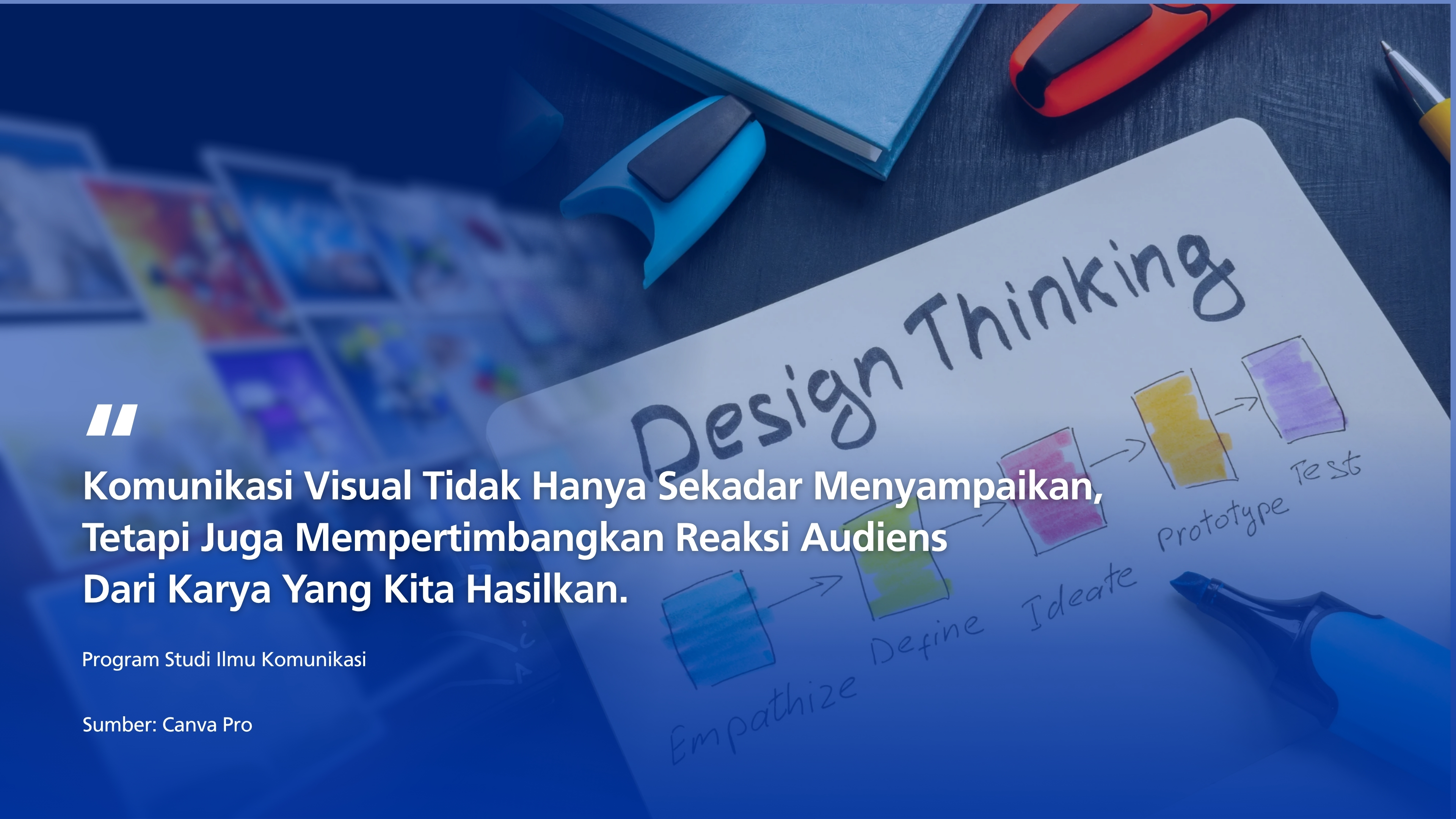
Recently, the internet has been buzzing about a phenomenon in which the designs of several local food stalls and eateries went viral for appearing to feature an “unnatural” illustrative style. As a result, when UNDIRA friends come across some of these posts, you may find comments such as, “The food doesn’t look appetizing,” or even, “It’s actually scary to look at.”
This phenomenon has become increasingly known across social media and online timelines as “AI Slop.” But what exactly is AI Slop? Doesn’t the presence of AI actually make content creation easier? Well, the short answer is: it depends. So, let’s take a closer look!
At its core, AI Slop refers to content generated using artificial intelligence and produced at scale without giving sufficient attention to accuracy, thematic consistency, visual taste, originality, or the potential public perception that may arise from the visual communication being presented. In short, the mindset is simply: as long as the information gets across, it’s good enough.
In reality, however, visual communication is not merely about delivering information. It also involves considering various elements that can create a lasting impression on the audience.
One of the concepts discussed in visual communication studies at the Rochester Institute of Technology in New York is “negative space.” This is a fundamental principle that should be considered by designers and anyone interested in visual communication, including photography and video. Essentially, negative space helps improve readability and gives a design some much-needed “room to breathe.” It also relates to the flexibility and control of the visual elements incorporated into a composition.
For example, imagine a metropolitan city. A landmark could be positioned as the central visual hook, attracting the audience’s attention. The primary information or key data could then be placed near the visual hook, while supporting words or secondary information can be distributed across several areas with proportional spacing from the main visual and primary information.
Beyond readability, color composition is another important aspect when creating engaging visual communication. From a color perspective, designers can experiment with a three-color scheme in which each color complements the others without creating excessive contrast or visual distraction, while still aligning with the theme and character of the relevant industry.
According to Andhika Iswardana, S.Ds., Social Media Specialist at Universitas Dian Nusantara (UNDIRA), confidence in designing or creating visual communication ultimately depends on the principle of “the man behind the gun,” or, in other words, the person’s own judgment, taste, and creative sensibility.
“Whether we use design software or AI, they are simply tools. How we approach and utilize those tools is the key factor in determining the success of our visual communication. That is why designers and visual communication enthusiasts need to understand fundamental design principles, such as composition and layout. We also need to understand audience psychology: what kinds of colors and layouts are likely to appeal to them? Once we understand these fundamentals, both designers and non-designers can create more precise prompts based on what they actually want, helping them avoid the phenomenon of AI Slop Designs.”
“Once again, in my opinion, AI itself is not the problem. Rather, we need to become more skilled at writing effective prompts and understanding the principles of visual communication, instead of simply using AI-generated designs without reviewing or refining them,” he explained.
It is important to emphasize that AI can certainly enrich information and simplify various aspects of our work. However, there is a fine line that requires us to carefully review and evaluate the output generated by AI.
The Communication Studies Program at Universitas Dian Nusantara (UNDIRA) offers three key concentrations: Marketing Communication, Public Relations, and Broadcasting. These concentrations are designed to equip students not only with theoretical knowledge but also with hands-on experience in real-world production environments.
Through this applied approach, students are directly involved in the creative process, from research to production, enabling them to create meaningful and impactful visual works while avoiding the “good enough, just get it done” mindset often associated with AI Slop.
So, come and become a visionary, integrity-driven, and professional communication practitioner at UNDIRA, while sharpening your communication taste and creative sensibility with us!
Source of Reference:
(Danang Respati Wicaksono / Humas UNDIRA)
Press Contact :
Biro Humas & Sekretariat Universitas Dian Nusantara
Facebook : www.facebook.com/undiraofficial
Instagram : www.instagram.com/undiraofficial
Twitter : www.twitter.com/undiraofficial
www.undira.ac.id


Campus Tanjung Duren
Jln. Tanjung Duren Barat II No. 1
Grogol, Jakarta Barat. 11470
Campus Green Ville
JIn. Mangga XIV No. 3
Campus Kranggan
Jln. Raya Kranggan, No.6,
Jatiraden, Kec. Jatisampurna, Bekasi. 17432


