

Article

Materials 101: Understanding Asbestos in Construction: Benefits, Risks, and Modern Material Alternatives


 By :
By : 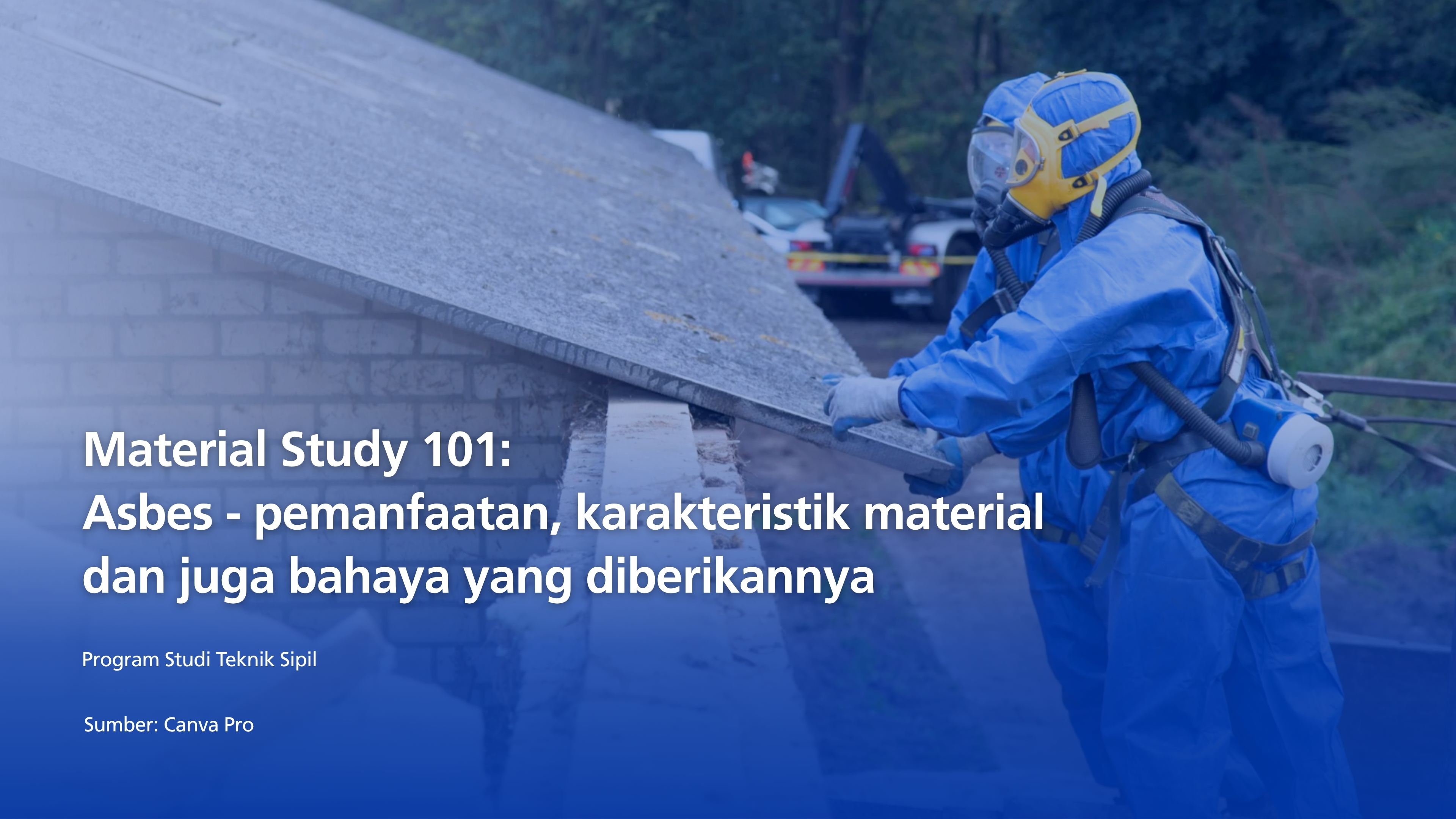
Asbestos is one of the most widely recognized materials that has been extensively used in construction projects around the world. Known for its durability and versatility, it became a staple in the industry for decades.
For many years, asbestos was mass-produced and commonly used as both a primary construction material and an additive in residential buildings, as well as commercial structures such as shop houses and factories. Its popularity stemmed from several outstanding properties: excellent heat resistance, high durability, lightweight characteristics, and relatively low production costs.
However, extensive research has since revealed that prolonged exposure to asbestos can pose serious health risks. Why is this the case? Let's explore the issue through the perspectives of Civil Engineering and construction material science.
As scientific research on asbestos continued to develop, experts identified several important characteristics that deserve attention. Asbestos is a naturally occurring mineral primarily composed of magnesium and silica. While these minerals are not inherently dangerous when touched or observed, the real hazard arises when asbestos fibers become airborne and are inhaled.
In construction products, asbestos is typically processed into microscopic fibers and incorporated into building materials. Like any construction material, however, asbestos can deteriorate over time due to aging, weathering, or physical damage. As the material weakens, tiny mineral fibers are released into the surrounding air—and this is where the greatest danger begins.
With fiber sizes ranging from approximately 0.1 to 10 micrometers, these particles are small enough to remain suspended in the air and easily enter the human respiratory system. Long-term inhalation may lead to serious health conditions, including shortness of breath, asbestosis—a chronic lung disease that can ultimately result in respiratory failure—and even certain types of cancer. These illnesses occur because asbestos fibers can damage lung tissue and trigger persistent inflammation within the respiratory system.
From an environmental perspective, broken or improperly discarded asbestos materials also present significant ecological concerns. Classified as hazardous and toxic waste (B3 waste) in Indonesia, asbestos debris requires careful handling and disposal because it can contaminate the environment and threaten ecosystem sustainability if left unmanaged.
Recognizing these risks, the field of Civil Engineering continues to innovate by developing safer alternatives that not only protect human health and the environment but also maintain the structural performance required in modern construction.
Alternative materials such as cellulose fibers and synthetic fibers, often combined with supplementary materials like fly ash, can provide mechanical strength comparable to asbestos while eliminating the carcinogenic risks associated with asbestos fibers. Another promising alternative is Unplasticized Polyvinyl Chloride (UPVC), which offers excellent durability, resists degradation, and does not release hazardous airborne particles during normal use.
This discussion highlights an important principle in construction engineering: selecting a building material should not be based solely on cost-effectiveness and durability. Equally important are the safety of building occupants, the health of surrounding communities, and the long-term environmental impact of the material—even after the structure reaches the end of its service life.
As the construction industry continues to pursue safer and more sustainable solutions, the Civil Engineering Study Program at Universitas Dian Nusantara (UNDIRA) provides an excellent opportunity for future engineers to be part of this transformation. Students not only gain comprehensive knowledge of construction technology and material engineering but are also trained to become ethical, competent, and professional civil engineers who prioritize occupational health and safety (OHS) standards in every project.
So, what are you waiting for? Turn your curiosity about the world of construction into the first step toward a rewarding career. Join the Civil Engineering Study Program at Universitas Dian Nusantara (UNDIRA) today and start building a future that is stronger, safer, and more sustainable with us.
Source of References:
Indonesia Sehat Tanpa Asbes - Lion Indonesia Org.
Penggunaan Asbestos Di Indonesia: Sejarah, Dampak, Dan Alternatif
Press Contact :
Biro Humas & Sekretariat Universitas Dian Nusantara
Facebook : www.facebook.com/undiraofficial
Instagram : www.instagram.com/undiraofficial
Twitter : www.twitter.com/undiraofficial
www.undira.ac.id



Campus Tanjung Duren
Jln. Tanjung Duren Barat II No. 1
Grogol, Jakarta Barat. 11470
Campus Green Ville
JIn. Mangga XIV No. 3
Campus Kranggan
Jln. Raya Kranggan, No.6,
Jatiraden, Kec. Jatisampurna, Bekasi. 17432


