

About Campus

Committed to Create High-Quality Future Innovators: UNDIRA’s Faculty of Engineering and Informatics Enhances Curriculum Through Capstone Design Workshop


 By :
By : 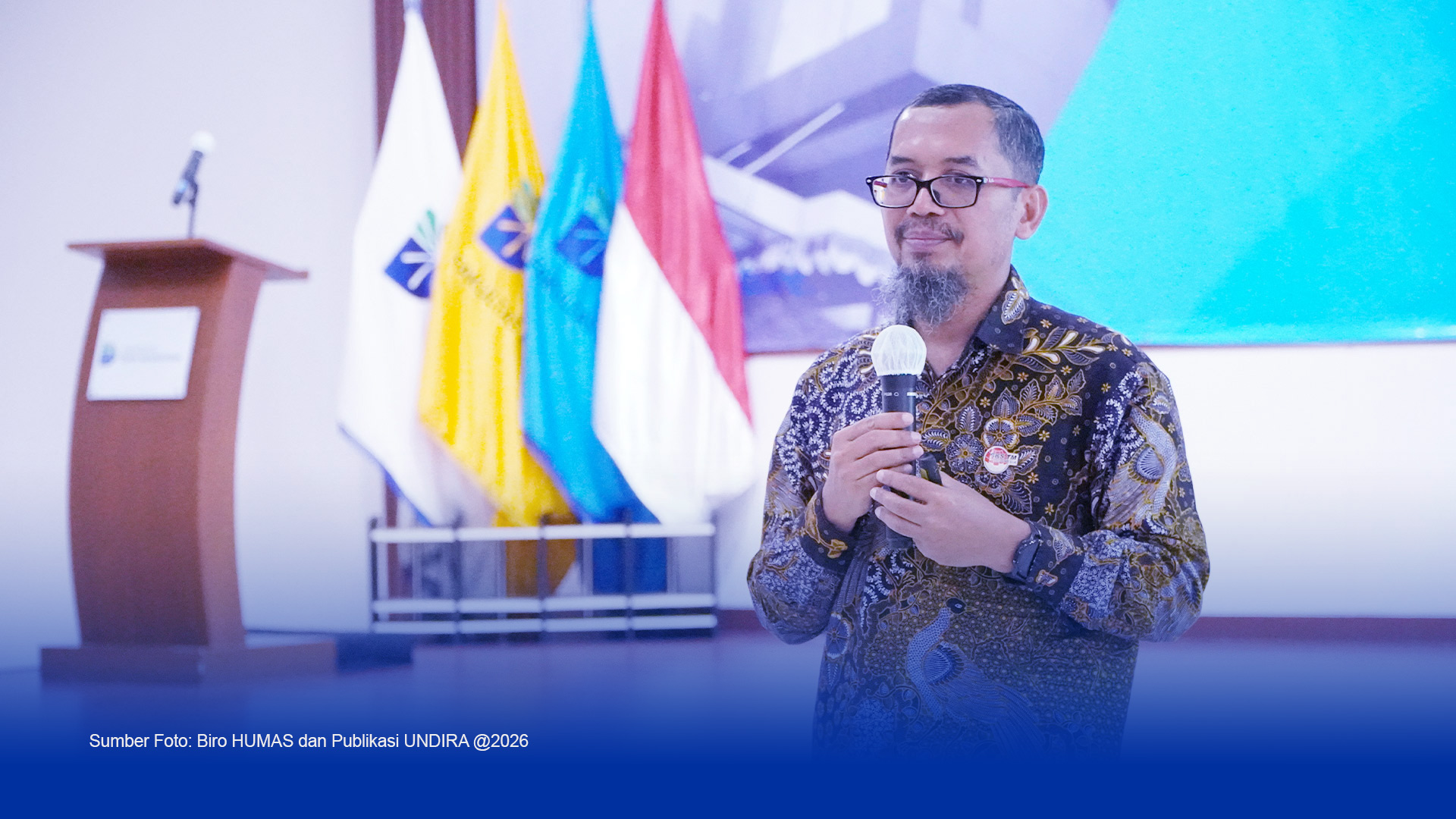
Jakarta, June 8, 2026 – The continuous improvement of higher education quality is a strategic priority for every academic program, particularly amid the ongoing era of industrial transformation. To support this development cycle, collaboration among study programs is equally essential in fostering an academic ecosystem that is not only competent but also impactful.
In response to this need, the Faculty of Engineering and Informatics of Universitas Dian Nusantara (FTI UNDIRA) organized a Capstone Design Workshop on Saturday, June 6, 2026, aimed at enhancing understanding and strengthening the educational framework for FTI UNDIRA students.
Held on the 6th Floor of UNDIRA’s Tanjung Duren Campus in West Jakarta, the workshop was enthusiastically attended by 190 participants, both onsite and online via Google Meet. The event also featured Dr. Ir. Risdiyono, S.T., M.Eng., IPM., Head of the Mechanical Engineering Study Program at Universitas Islam Indonesia, who served as the keynote speaker and shared extensive insights into the principles and implementation of Capstone Design.
Ir. Margono Sugeng, M.Sc., Vice Rector I for Academic Affairs of UNDIRA, who attended the workshop in person, emphasized that the implementation of Capstone Design throughout students’ academic journeys represents a strategic approach to addressing the evolving dynamics of education and industry demands.

“I believe that the implementation of Capstone Design within the learning process can cultivate professionalism, integrity, and critical thinking among students of the Faculty of Engineering and Informatics. Students are expected not only to absorb the knowledge delivered in the classroom but also to contribute it back to society through impactful innovations that address contemporary industrial and societal needs. Furthermore, Capstone Design-Based Projects will foster sustainable knowledge development for the benefit of the nation,” stated Vice Rector I, Margono Sugeng.
Opening the main presentation session, Dr. Ir. Risdiyono explained that Capstone Design is fundamentally one of the core components of the Outcome-Based Education (OBE) learning system embedded within the Faculty of Engineering and Informatics curriculum standards.

Ideally, a Capstone Design Project requires students to form interdisciplinary teams—preferably starting from their sixth semester—to develop project concepts and prepare the necessary budget planning documents. These projects can then be further developed into tangible innovations aimed at solving real-world problems in accordance with the needs of stakeholders and society.
“Philosophically, everything becomes unstable without a capstone; in certain cases, the capstone is the key element itself. Capstone Design-Based Projects serve as concrete evidence that students are capable of integrating all learning outcomes acquired throughout their studies into a single work focused on solving real-world challenges,” he emphasized.
Continuing his presentation, Dr. Ir. Risdiyono elaborated on the TRIZ (Theory of Inventive Problem Solving) approach integrated into Capstone Design, highlighting four core philosophies that support the framework.
“At its core, TRIZ teaches that every engineering problem contains contradictions, and those contradictions are not dead ends but starting points for innovation. TRIZ encourages us to envision the ideal state—the best possible solution without sacrificing other functions. Technical systems do not evolve randomly; they follow measurable and predictable patterns of evolution. The most effective solutions emerge from maximizing existing resources rather than introducing additional complexity.” He further underscored the relevance of TRIZ within the Capstone framework.
“These four philosophies make TRIZ more than just a tool—it becomes a way of thinking. Through Capstone projects, students are challenged not only to solve problems but to do so systematically, creatively, and measurably,” he concluded.
The final outcomes of Capstone Design Projects must also be accountable and well-documented, making transparency and accountability key components within the project assessment rubric.
At the conclusion of the presentation session, Dr. Ir. Risdiyono opened a question-and-answer segment, followed by presentations from lecturers of the Faculty of Engineering and Informatics, who showcased their respective Capstone Design study proposals.

Capstone Design serves as a bridge connecting academic knowledge, innovation, and real-world application. FTI UNDIRA remains optimistic that this strategic initiative will establish a strong foundation for the emergence of future innovators capable of driving meaningful change for the nation. More than merely a professional development forum, the Capstone Design Workshop organized by FTI UNDIRA stands as a collective declaration that meaningful engineering education begins with the courage to design curricula capable of producing graduates who create lasting positive impacts on society and national development.
Press Contact :
Biro Humas & Sekretariat Universitas Dian Nusantara
Facebook : www.facebook.com/undiraofficial
Instagram : www.instagram.com/undiraofficial
Twitter : www.twitter.com/undiraofficial
www.undira.ac.id
Other
.jpg)
The Fine Line Between Freedom and Danger: Controversy Over Content Creation and Data Misuse by AI
Read more
Microagression: Understanding the Acts of Downplaying of Others with Wordplay Through Academic Lens
Read more
Dian Nusantara University's Research Institute Holds Monitoring and Evaluation for 2025 Ministry Research Grant Progress Reports
Read more
Campus Tanjung Duren
Jln. Tanjung Duren Barat II No. 1
Grogol, Jakarta Barat. 11470
Campus Green Ville
JIn. Mangga XIV No. 3
Campus Kranggan
Jln. Raya Kranggan, No.6,
Jatiraden, Kec. Jatisampurna, Bekasi. 17432


